

'Concrete Monstrosity' Protected
To the despair of fuddy duddies, the South Bank Centre achieves Grade II Listed Status!

Hoorah! After a 35-year campaign, the South Bank Centre has been given Grade II Listed status, thus protecting it, (a bit),from any cultural philistine who wishes to do away with London’s precious arts centre.
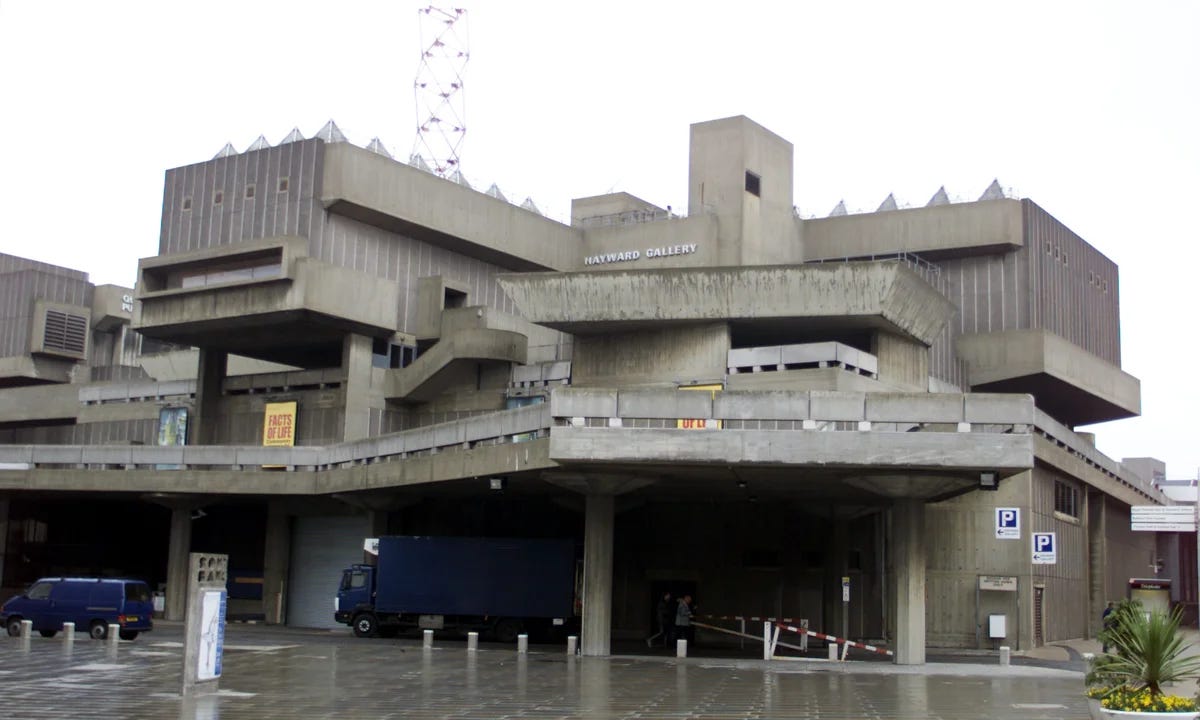
The South Bank Centre, looking up to the Hayward Gallery
Quite frankly I am astonished it has had to wait nearly 60 years for this, but thus is the whirligig of architectural taste, and Brutalism, for which the SBC is always held responsible, is very much not in at the moment.
Indeed, one hack, namely Simon Heffer, has waded in, opining in The Telegraph (of course), that the SBC is a “concrete monstrosity”, and adding “in an ideal world, the Southbank Centre (sic) would be flattened and a competition held to build a handsome replacement..” blah blah, etc.
Presumably he would like something designed by Christopher Wren. Or Frank Matcham, whose gilded Victorian theatres are wonderful playhouses but have you ever tried going to the loo AND buying a drink during the interval in one of them? Of course, Simon Heffer has not suffered the rigours of a Matcham Ladies’ Queue.
It is the largest arts centre in the UK and the first arts centre I can remember visiting, as a small child, going to a Saturday morning Ernest Read Children’s Concert at the Royal Festival Hall with my mother in the early 1970’s where we experienced TV’s Johnny Morris, of ‘Animal Magic’ fame, introduce Saint-Saens’ Carnival of the Animals.
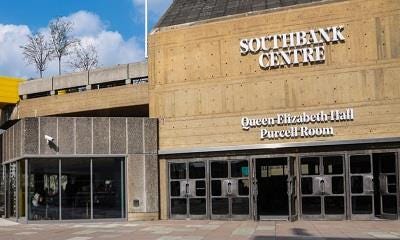
To clarify, the buildings which have now achieved statutory heritage protection are the wonderful Hayward Gallery, Queen Elizabeth Hall and Purcell Room, as well as the skatepark underneath, and all the terraces and walkways which draw millions of people annually to this part of South London. (The Royal Festival Hall achieved Grade 1 status in 1988). The whole thing was designed by a team headed by Norman Engleback who, while still only in his late 30’s, was in charge of the Greater London Council’s architectural wing. It still feels young, with a certain optimistic swagger.
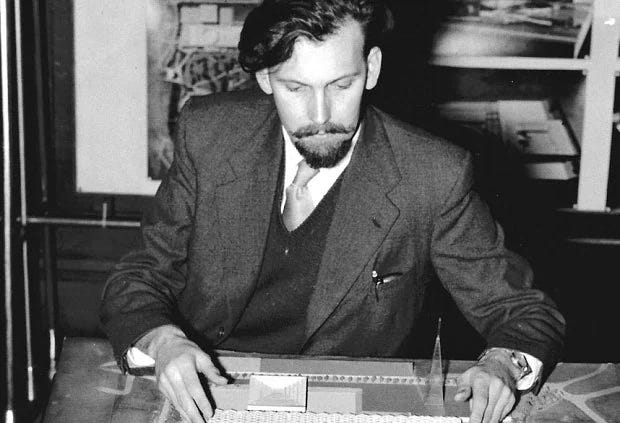
Hero: Norman Engleback
Hoorah for Mr Engleback. Mr Heffer (and all other Brutalist haters, such as Simon Jenkins, the King etc) may well bay for its flattening, but the South Bank Centre is much loved. Or, as the Londonist magazine puts it, “its complex and imposing concrete volumes have many fans.”
I am certainly one of them, and I hope I can convince you to be one too, if you aren’t already.
Why ought it to be cherished as much as any London landmark? Catherine Croft of the Twentieth Century Society says that it is “a highly sophisticated, sculptural masterpiece, with enormous richness of form and detail inside and out.”
Here are other 10 reasons to love the South Bank Centre:
1. It is easy to get around.
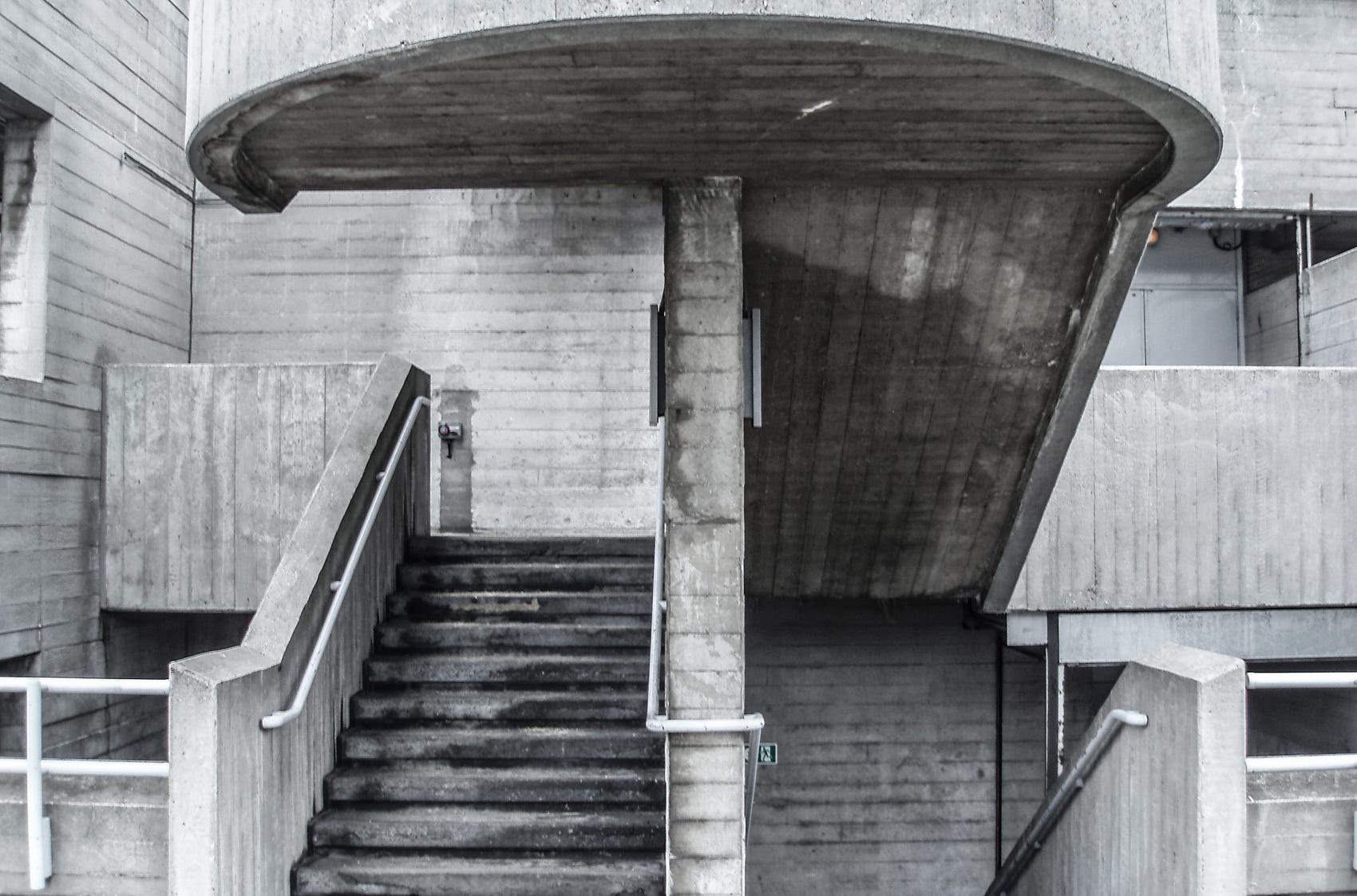
Whether dropping down from Waterloo Bridge, or walking from Upper Ground, large, open staircases and wide, welcoming walkways link each building with the Royal Festival Hall in the centre. I have used it as part of my running route for years and never once fallen down the stairs, or barged into anyone.
2. Each building is of equal importance.
This is not the case with other arts centres, for example the Barbican, where the art gallery is very much secondary to the concert hall. That is if you can find it.
3. The buildings are specific to their art form.
But they are also flexible and accommodating to others. I have heard Sean Shibe play guitar in the Hayward Gallery; I have seen art in the Festival Hall. I have been to a concert played by schoolchildren at the Purcell Room. But each place knows, with clarity, what its assigned purpose is and what it is doing.
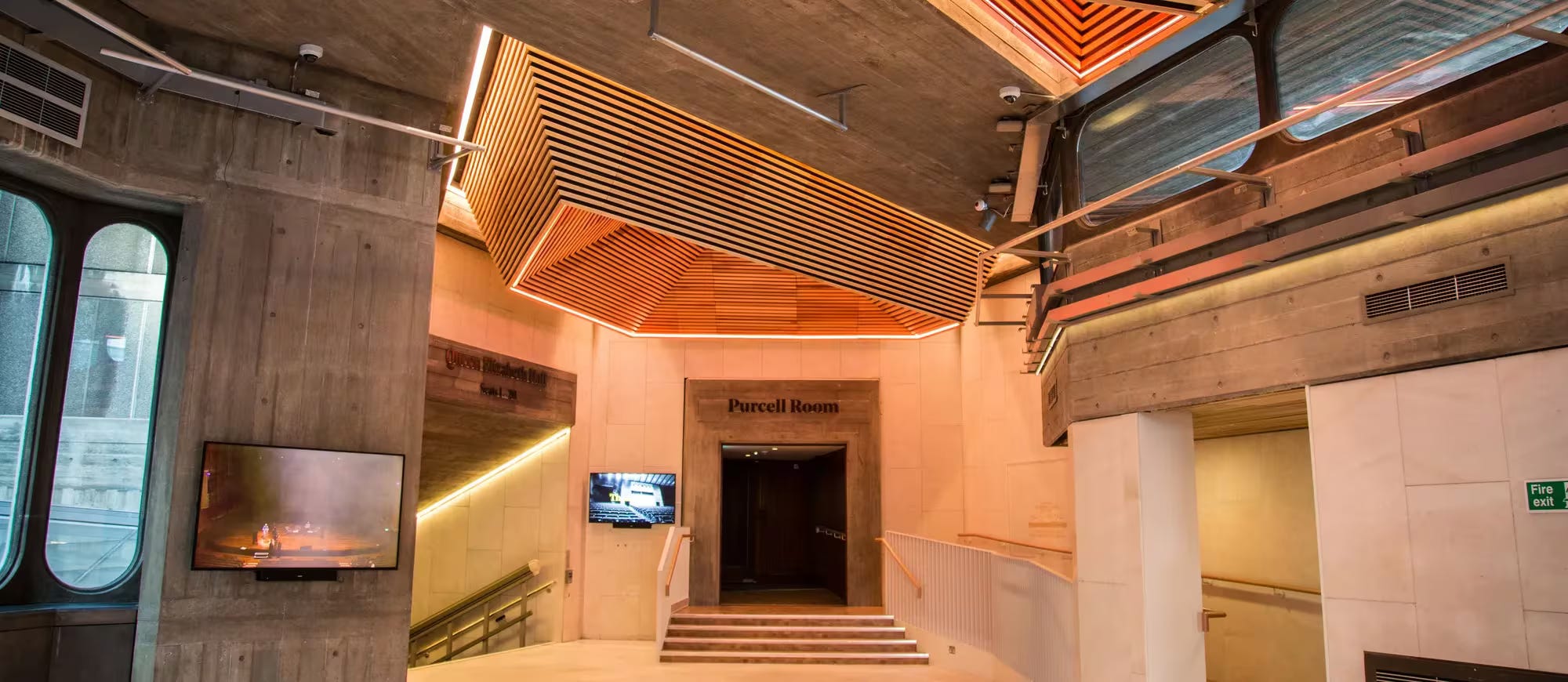
The warm and inclusive entry to the Purcell Room
4. The foyers in each building are generous.
They also encompass proper public facilities. Yes, there are proper toilet allocations, but also really nice cafes and restaurants. This is not true of any Victorian theatre in the West End, or even the Albert Hall, which has no proper foyer and vanishing toilets.
5. The concrete is beautiful, in all lights.
It is also democratic, in its all-encompassing generosity. There is no class division in its design, which could not be more bespoke. It was cast in situ.
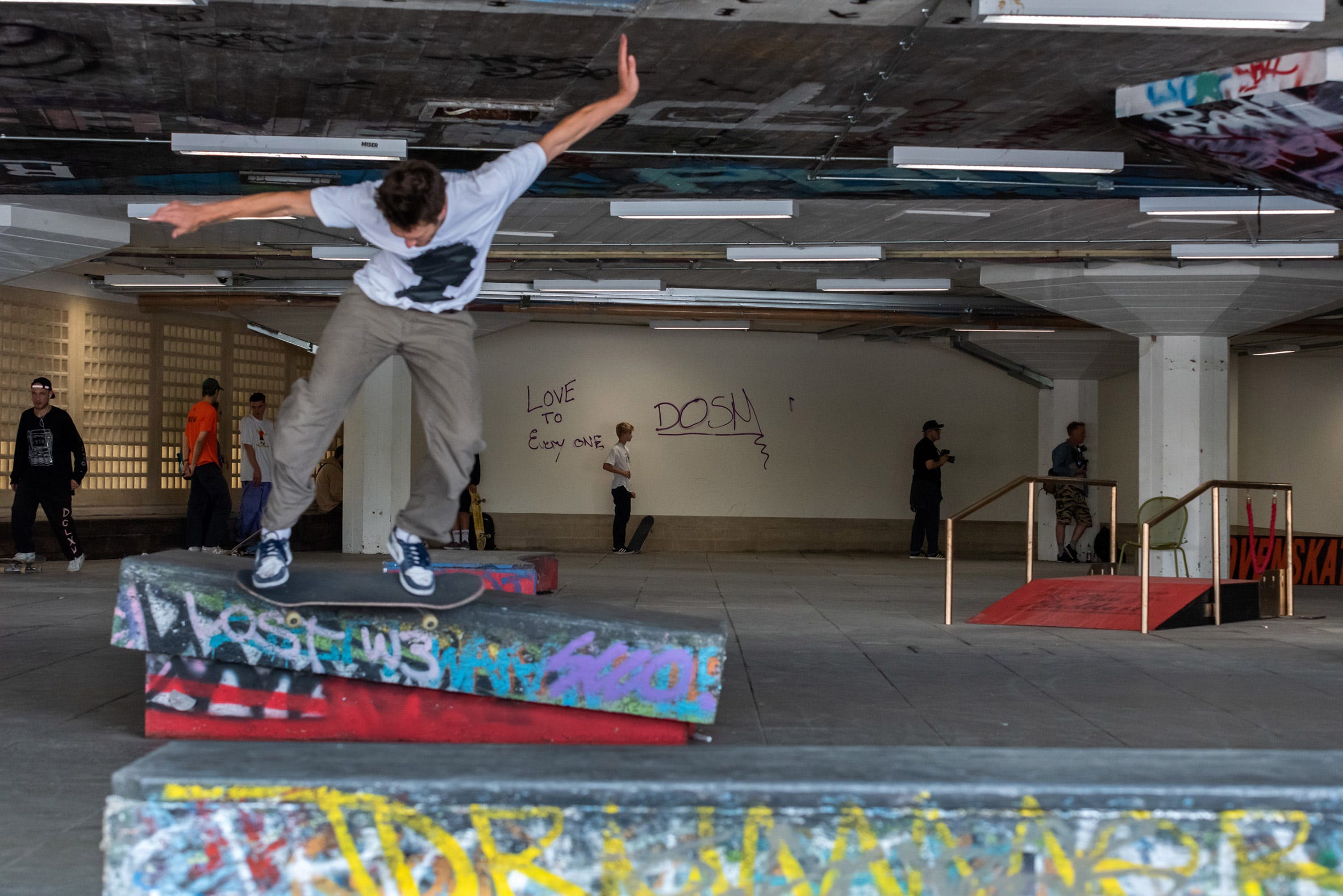
Skateboarding under the SBC
6. The layout is properly horizontal, as London itself is.
For all the fuss about the Shard, Walkie Talkie et al, London is a lengthy experience which lies along the Thames. The South Bank Centre echoes this in a beautiful way, as does Denys Lasdun’s National Theatre next door (another brutalist triumph).
7. Much of it is free.
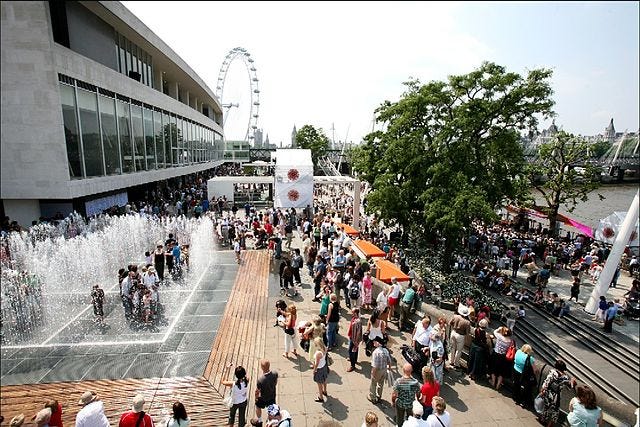
Summer at the SBC
There are plenty of open air festivals outside in the summer. You don’t have to pay to skateboard in the undercroft; you don’t have to pay to come and sit in the foyer of the Royal Festival Hall and use the WiFi. There is a Poetry Library on the top floor.
8. It is in South London.
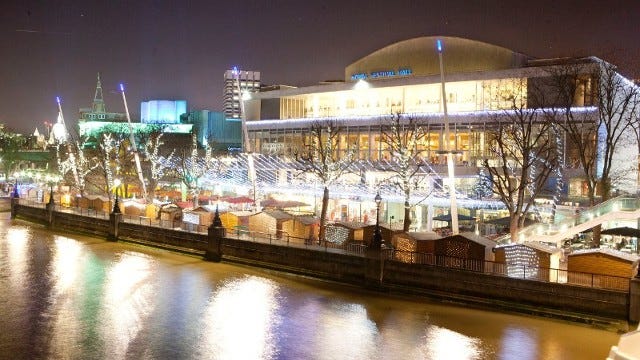
Southern Belle: the beautiful South Bank Centre
The South Bank Centre is one of the capital’s few spectacular destinations on the ‘other’ side of the Thames. Its huge structure embraces the river with knockout views, and squares up to the Houses of Parliament and Somerset House with equanimity.
9. It does not carry a “Royal” identity.
Yes, the Royal Festival Hall is there, but it comes under the soubriquet of the South Bank Centre, which represents all Londoners.
10. It is youthful and future-facing.
This year marks the 75th anniversary of the Festival of Britain, where the idea for the South Bank Centre was born. A celebration of British youth culture at the SBC on the May Bank Holiday is one of the many events this year. I hope very much that it irritates more fuddy duddies at the Telegraph.
As an architect, it is hard to be objective. Brutalism is not my favourite form, nevertheless I recognise all the merits listed. And the one that counts for more, in my mind, is sll the memories the South Bank complex carries. Part of so many people's childhood introduction to art and music and novelty, it is now a vintage piece. And you can't tear down memories, they become part of the building - the structure being more than the sum of its structural parts
Pleased to hear this, Rosie! I love the South Bank Centre. So much on offer there culturally and the foyers are such good spaces to meet up or pass time. Very family-friendly.