

Frieze
Looking from 25 years ago to now

The international art crowd at Frieze, the big annual London art fair, errs on the side of young, thin, and overtly rich, with the horror of engaging that some wealthy people have. I am at the Press Day. I walk into the giant marquee in Regent’s Park and watch as arty folks physically shy away from touching or even looking at other people.
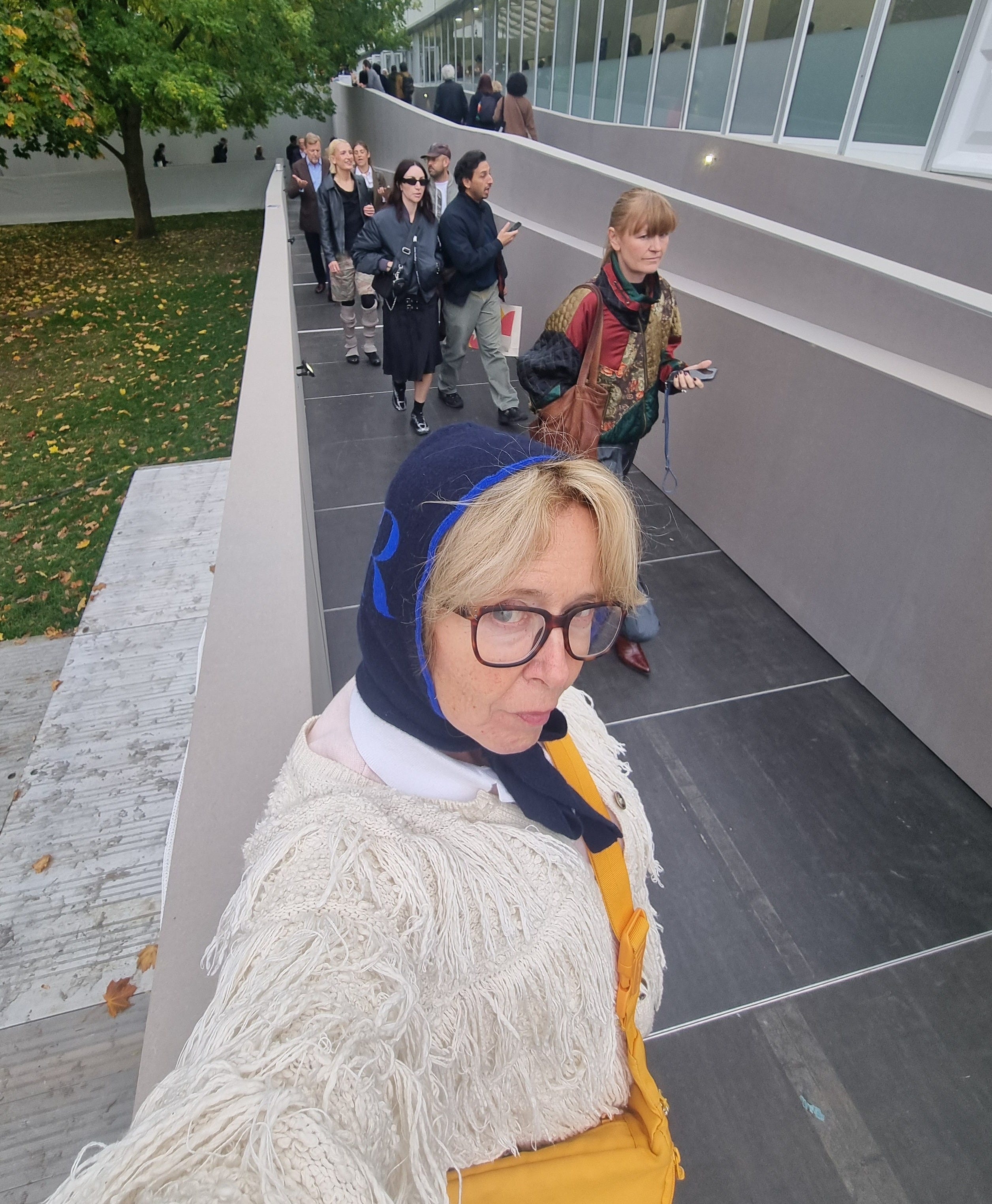
The scene at Frieze, Regent’s Park. Spot the person in sunglasses. In October.
Everyone (bar the hacks) has apparently received an “expensive eccentric” dress code. Floor-length velvet cloaks. Shorts. Knee length socks. Deerstalkers. Pinstriped suits (women). Arsenal tops (men). Ok, I am in a bonnet with R on it.
About 25 years ago I wrote a book on the contemporary art scene in the UK. It was called The Tastemakers. Its supplementary title was “UK Art Now”. It was an interesting project, not least because me and my ex-husband, an investigative documentary maker, were targets of a death threat (due to a particular BBC show he had been working on), and we were living under assumed names, with a different car each week, in a safe house in North West London.
But in my day job, which started in 1995, I was covering the advent of the YBAs for BBC News, and five years in, death threat or no, I felt I had to do something permanent about it. I wanted to write something down, to hold onto the moment. The feeling of excitement, and the centrality of Britain in contemporary art was in the air. It was everywhere. Contemporary art was, for the first time, properly public-facing. And popular. It was on Top of the Pops, it was in the advertising campaign for Young’s Brewery, it was in Selfridges. It was all over Shoreditch, of course, but also Liverpool and Newcastle and Walsall. Its proponents were gods and its apotheosis was the opening of Tate Modern on the south bank of the Thames, in May 2000. It was, as they say, a moment. And I knew it wouldn’t last, not in that form.
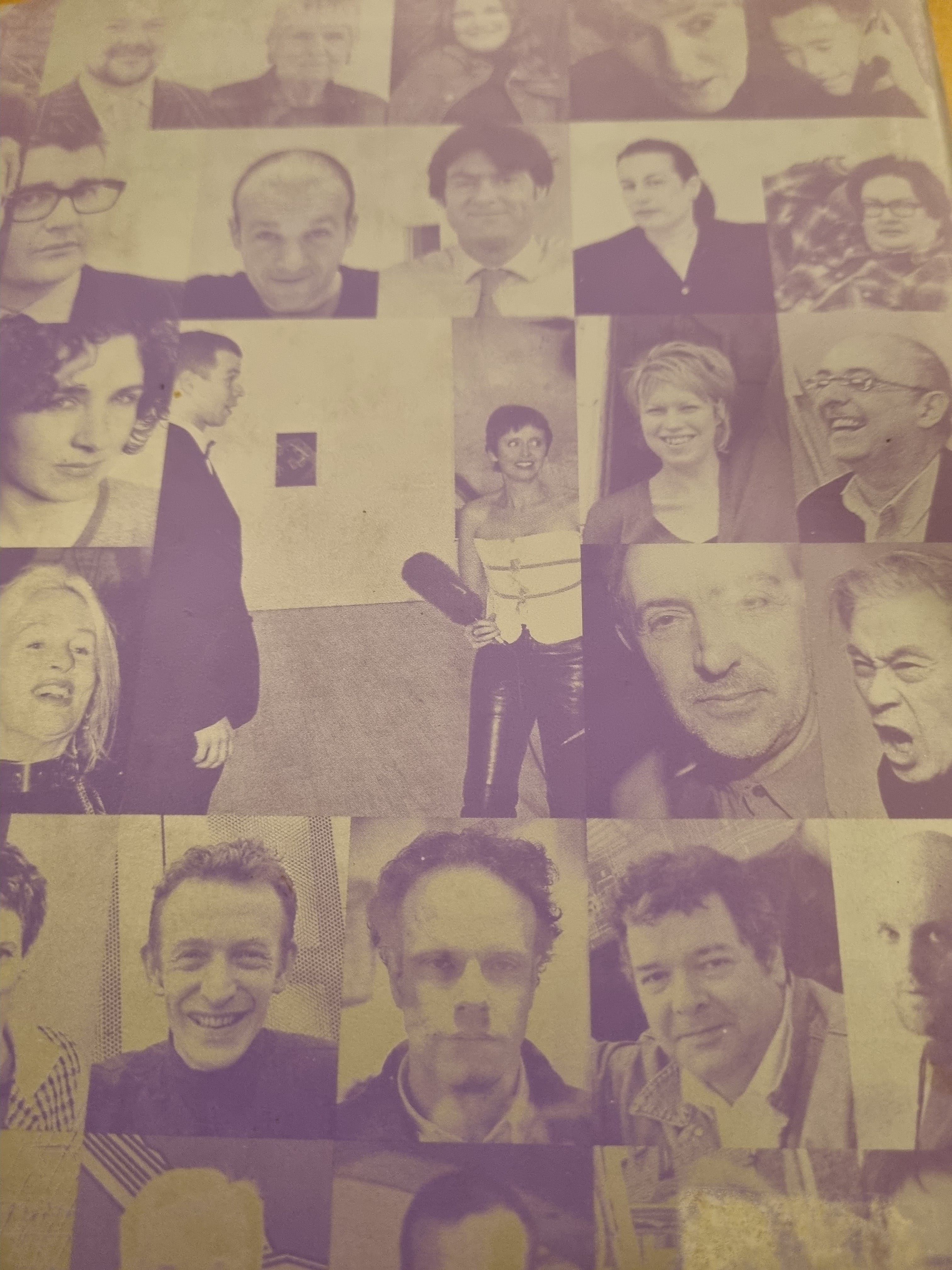
The back cover of The Tastemakers. How many people can you identify? I’m in the middle interviewing Wolfgang Tillmans after he wins The Turner Prize, 2000. All photos @Geraint Lewis
The British contemporary art tsunami is in a sense still going, but its commercial heft, which at the time only really meant one significant patron, namely Charles Saatchi, has mushroomed. Frieze – not Tate - is where it is now. Plus, philanthropy is a group sport with a global vision. Just this month the Chinese patron Yan Du launched an exhibition venue and artist residency for Asian and Asian diasporic art in a Georgian townhouse on Bedford Square, and in Fizrovia, just up the road, a new space for art of the global majority, Ibraaz opened with funding from the Tunisian-Swiss banker Kamel Lazaar and run by his daughter, curator Lina Lazaar.
Meanwhile, all those cheeky, penniless, media friendly artists, curators and collectors have in a sense left the public domain. They, and their offspring are at Frieze. The work is diverse and fun and attention seeking. Some is great and some is dispensable, but it is upfront and provocative.
On arrival I bumped into the artist and former critic Matthew Collings who back then was rightly lauded for Blimey!, his incomparable 1997 field guide to the YBAs. It was the reading partner for Brilliant! an exhibition held between 1995-1996 at the Walker Art Gallery Minneapolis, which first pulled the YBAs onto a world stage. These expressions, so British, summarised the moment.
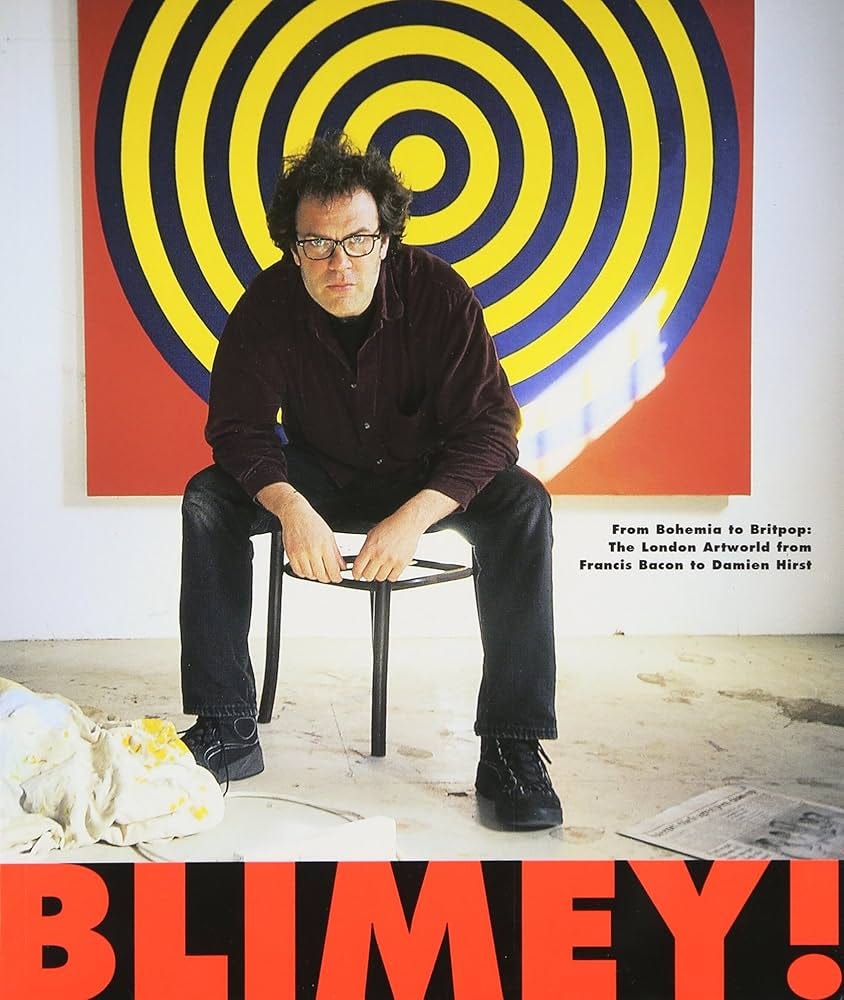
Our field guide to the YBAs..published in 1997, written by Matthew Collings
Collings is now a full time painter and has a show of his witty, social paintings on at the Handel Street Projects Gallery. The Sunday Times art critic Waldemar Janusczak, who back in the day, as Channel 4 arts commissioner (a lost-lamented post), took the Turner Prize (and made it essential viewing), called it “one of those rare art displays that feels as if it’s doing something art has never done before”. “I’m walking on air”, said Collings to me in response.
I go over to the Hales Gallery stand, where its proprietor Paul Hedge is talking to a man in a monocle and a tracksuit. Hedge is rocking a bespoke suit from Savile Row. I interviewed him for The Tastemakers when he had been in charge of Hales for 10 years; at that time, it was in Deptford, a cafe downstairs, gallery upstairs. This is what he says in the book;
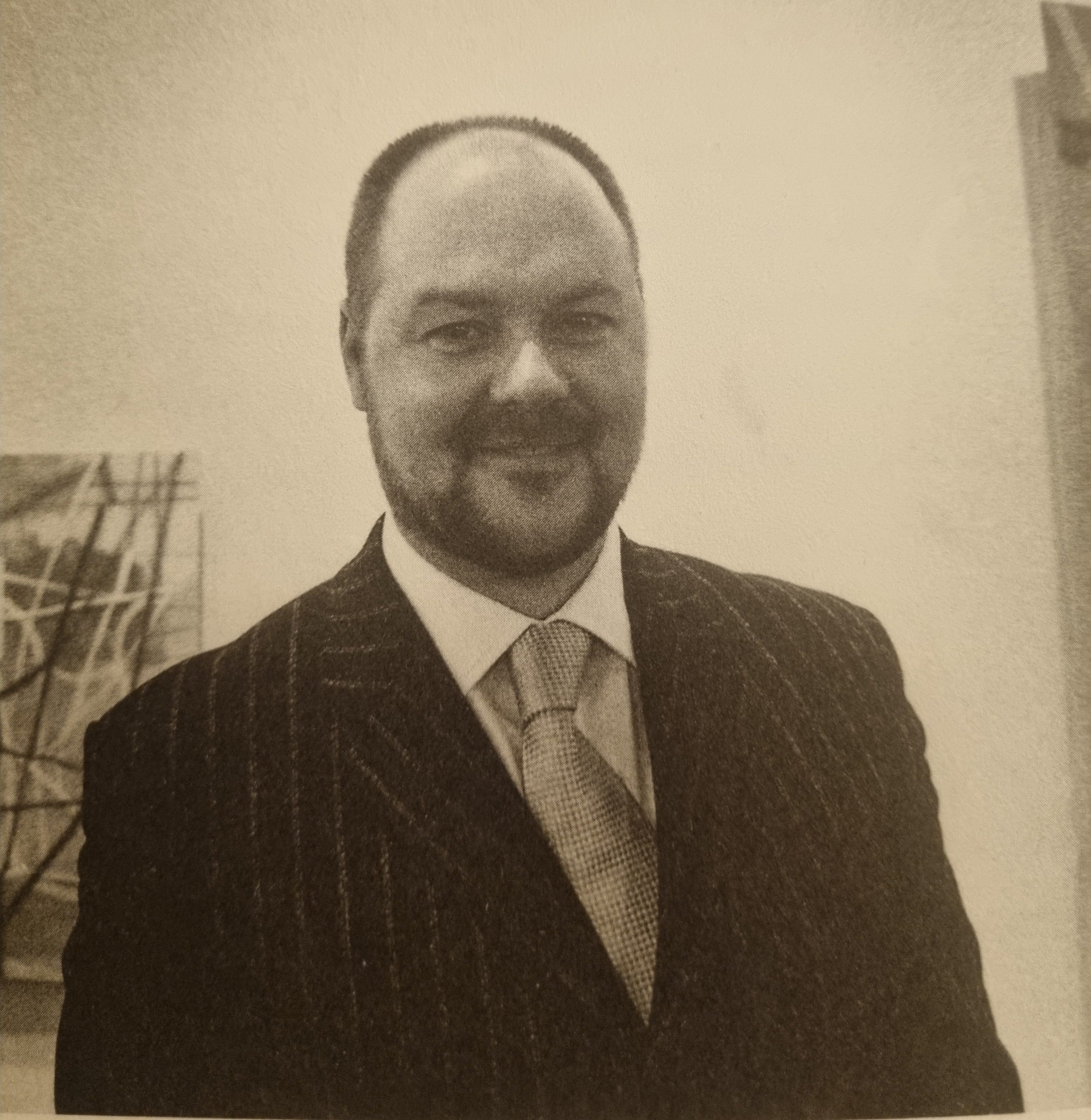
Paul Hedge at the original Hales Gallery, 2000 @Geraint Lewis, The Tastemakers
“Change is blowing through art galleries. They are having to respond to galleries like us. There is a huge difference in the way people see us now, compared with the way in which they were looking at us three, four years ago. People with money are now coming along and saying ‘Do you want some of it? I want to be part of what you are doing.’”
How perceptive these words now seem, 25 years on. Hedge has dumped the cafe and opened a bigger gallery in Bethnal Green. Plus he has one in Manhattan. A lot of clients have wanted to be part of what he has done for the last 40 years.
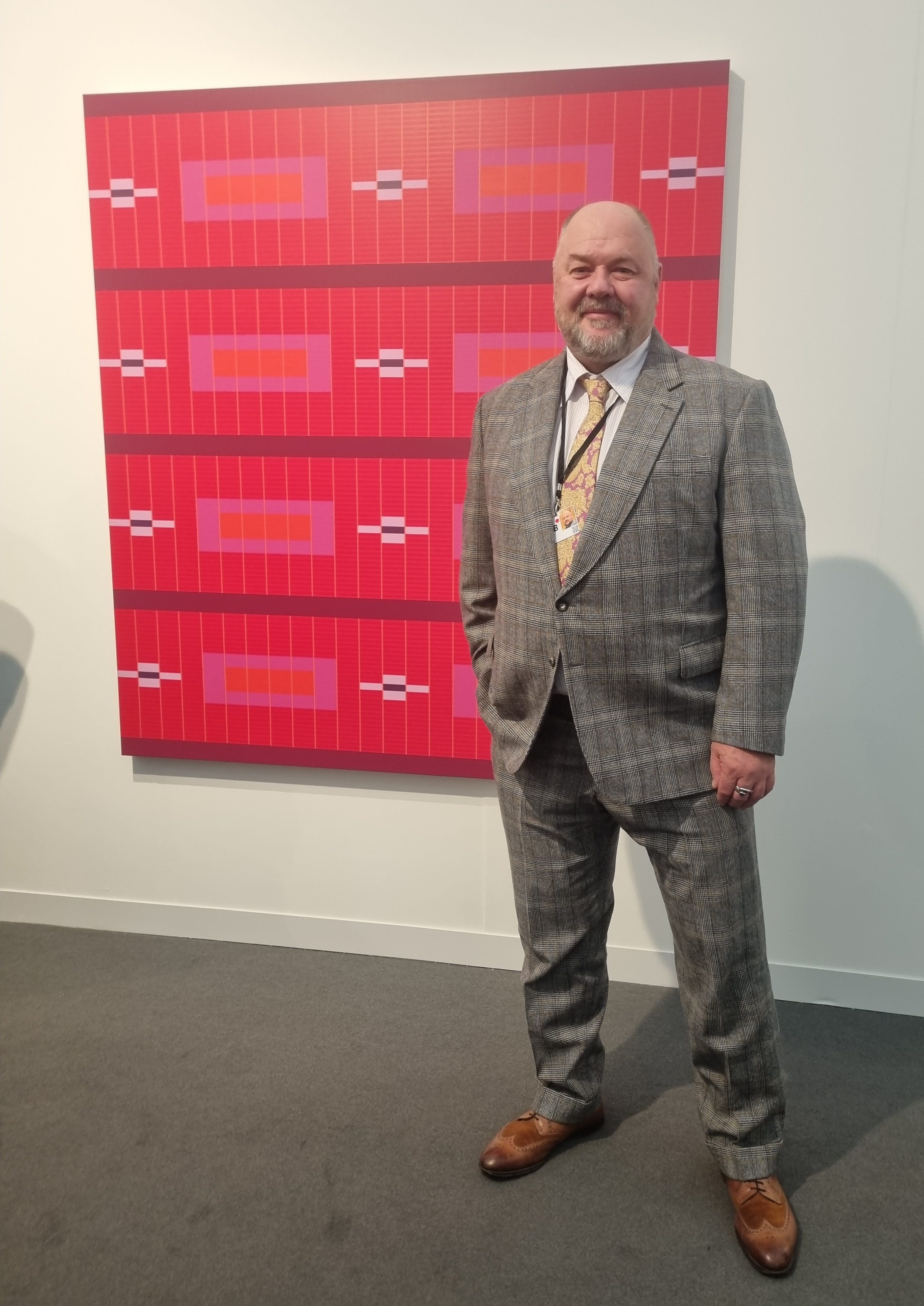
Paul Hedge in front of “Dainty Heart”, by Jordan Ann Craig at Frieze
From a distance, I see a familiar figure going into the Deutsche Bank Wealth Management Lounge. It’s Sir Grayson Perry.
Back in 2000, I interviewed him for my book. Before he was knighted, before he did the Reith Lectures, before he won the Turner Prize. I wrote; “Owning a Grayson Perry vase is now a very fashionable thing to do…particularly as Charles Saatchi has apparently bought a score. I meet the artist at a party after the British Art Show 5 opens in Birmingham. Perry is hanging out by the bar. In come three girls, who flock around him. ‘You’re gorgeous, you are. Do you know you look like a blond Paul Nicholas?” Perry chokes on his pint.”
As I leave Frieze I bump into a young writer, Alfie Johnson, who is giving out copies of The Toe Rag, a free newspaper reflecting the London contemporary at scene. It’s great. It has a listings section running to 131 events. At the back, “Phillis Stein, Agony Aunt” interviews a bunch of famous arty people at a Royal Academy party, including Sir Grayson. Here is what he says (I have no idea if this is for real, but it probably is);
“Art is over intellectualised….I came into art, wanting to make art, not to ‘be an artist’. Everything is so dry, - it’s been hijacked by the PhD. I don’t want to go to an exhibition and feel like I have to do homework afterwards. There’s more than one form of sophistication…and then there’s politics, of course, but I won’t go into that, not after four glasses of champagne.”
The British art world. Still fun. Still irreverent. Yes, there are a lot of lofty people at Frieze. But there is still a sense that the London scene cannot and will not be overlooked, and that is not a legacy of Tate Modern, or the Arts Council, but a legacy of the panache and talent and attitude of the YBAs.
Thanks so much for reading The Arts Stack! Do pass it onto your friends and give the post a heart if you liked it.
That has made me want to put on a pinstripe suit and go round Frieze for a couple of days pretending to be rich.
Thank you.
It’s a great bonnet in fairness