

Low or High?
Can you have a fun cultural weekend Across the Brows?

Lowbrow or highbrow?
No other country bar the UK is so obsessed with this definition in the arts. Although maybe it’s no bad thing. Perhaps no other country can give you Total Brow engagement, so readily. This came to mind after a brilliant weekend in Leeds, followed by some goings-out in London and finally an interview with the writer Marian Keyes for the Radio Times, who prompted me to think about it.
As an aide-memoir, the dictionary definition of low-brow is “Forms of entertainment that are straightforward and accessible”, while that for high-brow is “intellectual, or rarified in taste.”
Here’s the summary, with my wholly unscientific hi/lo brow rating:
1. Opera North’s new production of The Marriage of Figaro.
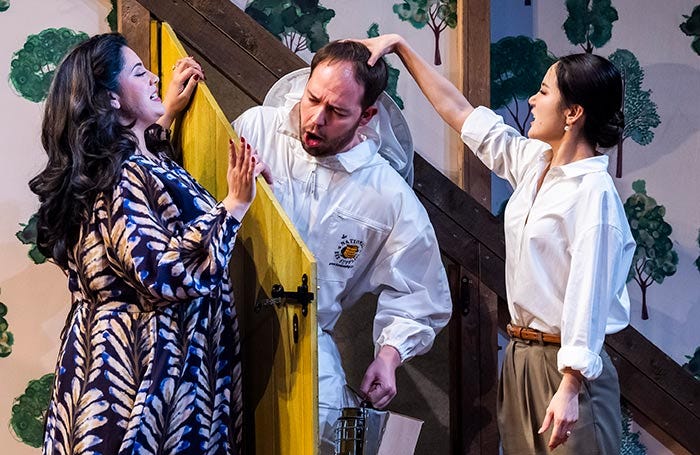
Opera for everyone; Opera North’s Marriage of Figaro @Tristram Kenton
The Marriage of Figaro, sung in Italian, with a full orchestra. At first glance, definitely high-brow.
However. This production clearly had elements of being “straightforward and accessible”. English surtitles, for one. A setting in the contemporary world, for another. Well known tunes which often turn up on Classic FM. A thoroughly unintellectual plot, hinging on the desire of the boss to seduce his employee.
Plus, it was at the Leeds Grand, a council-run venue slap bang in the centre of Leeds with reasonably priced tickets (as befits a nationally subsidised company). Ticket prices for Figaro in Leeds range from £20-£85, with anyone under 18 getting in for £12. For a teenager, this is comparable to the cinema.
Nobody wore black tie, (bar the orchestra), and lots of people were munching sweets and slurping drinks throughout. Show was terrific. Place was packed. To get tickets for the tour across the north of England this spring, click here Opera North
Brow rating : 3/5
2. Leeds vs Arsenal at Elland Road Stadium

Leading man: Viktor Gyokeres having scored one of the goals in Arsenal’s rout against Leeds
A Premier League football match, to which my husband, an ardent Arsenal fan, had been invited by our dear friend Jem, a Leeds season ticket holder.
Was it straightforward? Well, Arsenal needed to thump Leeds in order to secure their position at the top of the table, (which they did in dramatic fashion, winning 4-0).
Was it intellectual? Not really. But was the game accessible? Debatable. I stayed behind (reading Marian Keyes), as Jem only had one spare. The majority of seats are only available for season ticket holders. Is a season ticket at Elland Road cheap? Well, for a good seat it’s around £850, but there is an eight year waiting list, which makes it akin to Glyndebourne. If you just turn up, tickets range from £35-£60.
The stadium is over 2 miles from the centre of Leeds, necessitating in public transport or the cost of a car park. Walk? It was tipping with rain.
On the plus side, the songs were all well-known (including Is This a Fire Drill?, Greatest Team the World Has Ever Seen, etc), nobody wore black tie and lots of people were munching sweets and slurping hot drinks. Place was packed.
Brow rating: 2/5
3. The Night Manager, BBC 1

Beauty and the Beast; Hiddleston vs Laurie, The Night Manager
Ludicrous and hugely enjoyable last episode of sub-Bond, sub-le Carre spy TV drama, involving impossibly honed and morally upstanding hero Jonathan Pine, played by Marvel star Tom Hiddleston, and impossibly wicked pantomime baddie Richard Roper, played with glowering menace by Hugh Laurie, who goes around shooting dogs and threatening to cut people up and put them in shoeboxes.
Accessible, available and wholly entertaining. We ate and drank throughout and watched it lying down.
Brow rating: 1/5
4. Watermelon, by Marian Keyes

What a star. Marian Keyes
Watermelon is a chunky paperback with a pastel green coloured cover, which was first published 30 years ago, and is still in print. It cost me a tenner. Keyes told me that throughout her stellar career, nobody has expected much of her works, because they were ‘popular fiction’. The cover - and ChickLit genre - into which Watermelon, and the others, fall, mean her books are slightingly discredited as ‘Lowbrow’.
Watermelon is accessible, readable and funny. It wears its learning lightly (including quotes from Shakespeare and The Bible), and doesn’t hide its position. There are some pretty pointed observations about how modern day feminism is going (not well, frankly). It looks at the imbalance of modern relationships, and the overwhelming guilt heaped on women who don’t want to stay beside the carry cot. That it is funny, and easy to read, and comes in a pastel cover should not count. But it definitely does.
Brow rating: 3/5
5. Turner & Constable, Tate Britain
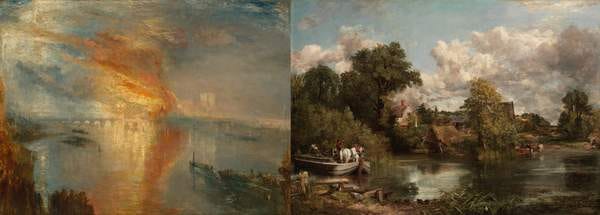
Turner’s Burning of the Houses of Lords and Commons, and Constable’s The White Horse
Even though their best known works, Turner’s Fighting Temeraire and Constable’s The Haywain have been left hanging on the walls of the National Gallery, this exercise at Tate Britain comparing the two giants of English landscape is fascinating.
To show the reach of this absorbing show, the two paintings illustrated above have been borrowed from the Cleveland Museum of Art (Turner) and New York’s Frick Collection (Constable).
The set up is (broadly speaking) this; Turner goes off to Italy, and the Alps, and depicts suns setting, buildings on fire and historical characters on galleons, while Constable stays in rainy Suffolk, painting the Stour Valley. However these two, who were born within 12 months of each other 250 years ago, manage to conduct a gentlemanly rivalry through waterpaint and oils, and finally learn to express it via giant canvasses. The way they diverge, come together, learn from one another and then spin off again is astonishing. It also makes the point that while Turner is something of a people, (or at least patron)-pleaser, Constable might be seen as the more radical of the two.
It’s like Blur vs Pulp, only done in landscape painting under the auspices of Tate Britain. But it is not cheap; unless you are a Tate Member it costs £24, or a fiver for anyone under 18. Runs to April 12.
Brow rating 4/5
6. Nouvelle Vague, by Richard Linklater
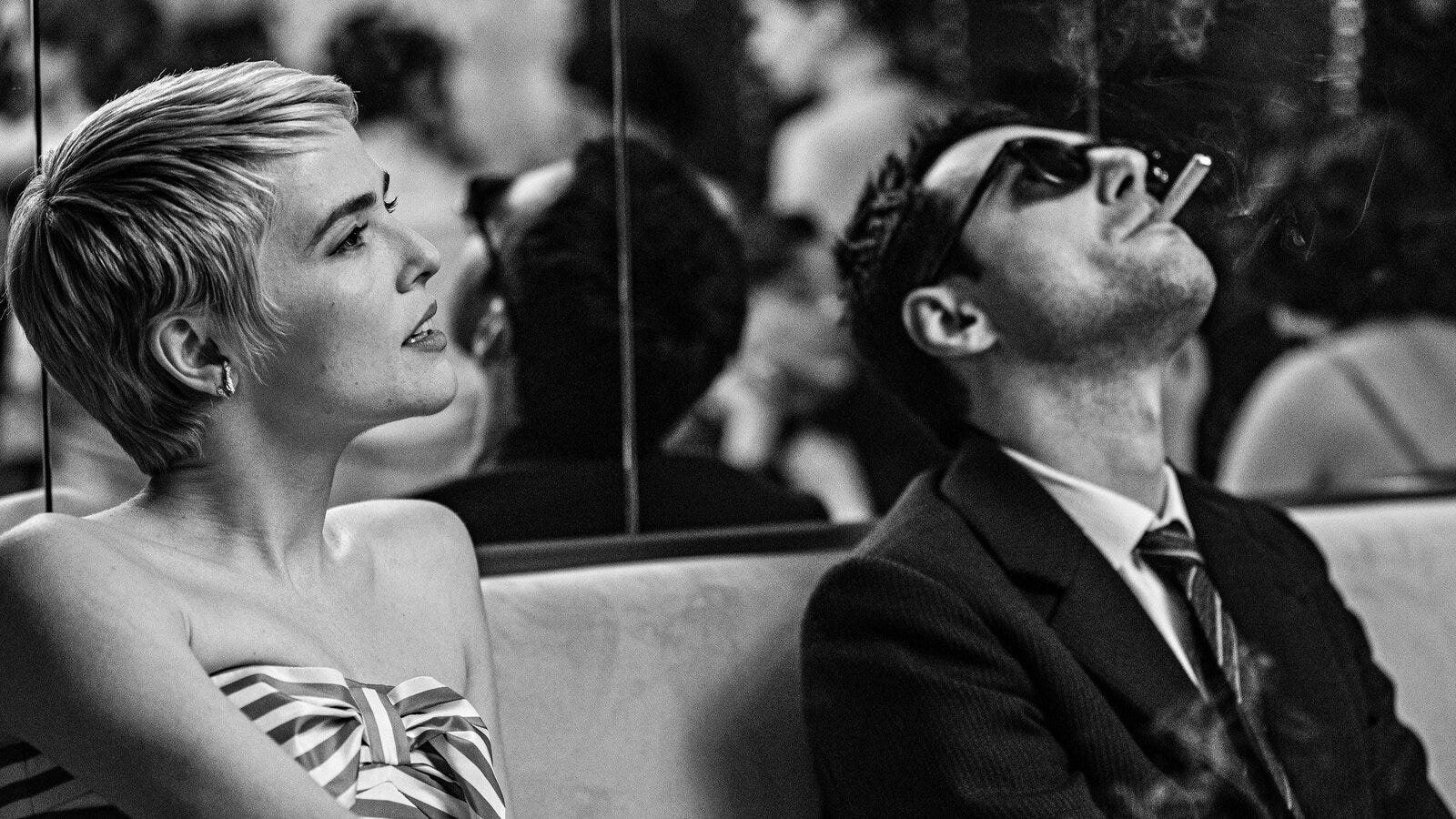
Jean Seberg (Zoey Deutch) and Jean-Luc Godard (Guillaume Marbeck)
“All you need to make a movie is a girl and a gun” (Jean-Luc Godard)
My final moment in my Entire Brow Survey was a trip to the Everyman Bloomsbury to see this pseudo-documentary about Jean-Luc Godard’s direction of Au Bout de Souffle (Breathless), in which Richard Linklater takes the viewer onto the shoot itself in homage to the radical French auteur.
Jean Seberg (Zoey Deutch) and Jean-Paul Belmondo (Aubry Dullin) are depicted on the streets of 1950’s Paris in the hands of the demanding Godard (Guillaume Marbeck), who throws the existing rule book away in order to make his film.
He refuses to have a script, makeup or hair and finishes the day’s shoot after 2 hours if he so desires. Linklater’s film, all striped shirts and Gauloises, is anything but revolutionary and only really makes sense if you have seen the original film, but it is fun and the vintage cars on the streets of Paris are terrific. Makes you feel intellectual, at least. And un peu francais, si vous aimez.
Brow rating: 5/5
Try and spend the next weekend sampling the arts and culture of your home across the “brow spectrum”; see how you get on!
Turner & Constable as Blur v. Pulp is good — Common People v. Nice House in the Country.
'Ludicrous and hugely enjoyable' is a perfect description of The Night Manager. I loved every second of Hugh Laurie's performance.