

Not the Sharp-est idea
How folk music dumped the name of its biggest champion

When I was in charge at BBC Children in Need, we used to say how very handy it was that our emblematic champion was a puppet, albeit a life-size one. Pudsey Bear was never going to let us down, fall out of a nightclub plastered, or worse.
The trouble about using actual people and their names in order to represent an institution, is that the behaviour of humans can be a lot more risky than that of puppets, and their actions can go off rather radically (Joseph Stalin, Edward Colston, Cecil Rhodes, I’m thinking of you). Or that the legacy of a named individual can simply become unfashionable.
I rather think (and hope) that it’s the latter which is behind The English Folk Dance and Song Society’s decision to rebrand itself and its famous London headquarters. As anyone who has ever gone through Regent’s Park will know, English Folk music has its HQ in the form of Cecil Sharp House, a beautiful period building which opened in 1930, six years after the death of its eponymous founder.
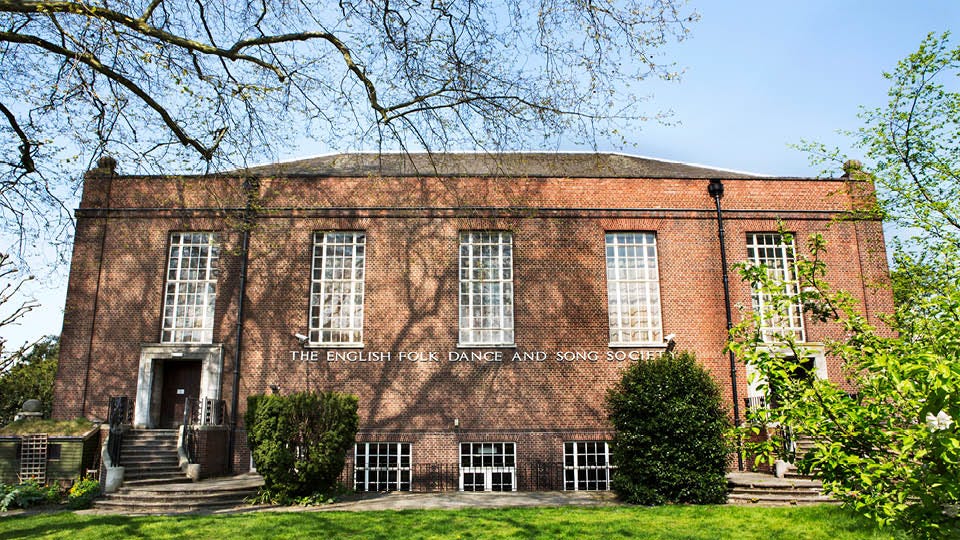
It is the centre for English folk music and in its name, it references an individual who did much to analyse, collect and revive the art form. Too bad. The English Folk Dance and Song Society, and the House it operates from will now become Folk England, a dull catch-all piece of magnolia paint, chosen by committee, signifying nothing. It’s not even full of sound. Or fury.
What is being gained by this erasure? Hard to see. What is being lost? Cecil Sharp was a schoolteacher, whose legacy not only includes the Society itself but also extends into influencing 20th century English orchestral music and the classroom singing experienced by thousands, if not millions of school children. Without Sharp championing it, it is quite possible that English folk music would have died out. Now it seems that the champion of not cancelling this vernacular art form has been, effectively, cancelled.
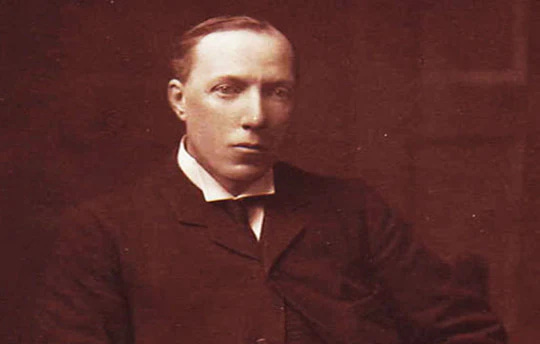
Cecil Sharp
He was born in 1859 on the Feast of St Cecilia, the patron saint of music and musicians. He was a musician and lecturer, but between 1904-1914, Sharp collected more than 1,600 songs from rural Somerset and over 700 from elsewhere in England. He was hugely influential. Ralph Vaughan Williams, who was fascinated by the traditions of English folk, incorporated many melodies from Sharp’s collections into his music. But he’s to be erased, too. The Vaughan Williams Library in Cecil Sharp House will become the Folk England Library. Such imagination!
Why, though, is Sharp becoming Folk England? On first glance, Sharp’s legacy looks pretty untrammelled by some hideous cupboard-residing skeleton. A left-leaning class warrior, he wrote about the importance of democracy and advocated social justice. So far, so good. But in his Wikipedia entry, there is a hint of why he has now fallen foul of cultural politics. “Sharp was a nationalist, and believed that exposure to English folk song would engender a spirit of patriotism.”
This is probably why his name must fall. Not because, like Cecil Rhodes, he oversaw some hideous racially segregated government. But because he championed the music which was created by groups in small rural communities in the UK, and that could be called patriotic, although that’s not quite clear (he did not advocate hugely patriotic songs in his collections for schools), but anyway, that is seen as a swift path to embracing thugs carrying St George’s flags.
The Society says that it wishes to “modernise the image of the institution and broaden its appeal”, an ambition which could be said to be true of almost every arts organisation in the UK, including English National Ballet, the Royal Opera House, the Edinburgh International Festival, and the BBC. Which hasn’t fallen into a moral panic about its name, at least not yet.
“The board cited a need to make folk music and dance more welcoming”, states the Society, possibly forgetting the mission of their founder who, in contrast with the achingly barren stature of music education in most state schools today, successfully managed to instil music and singing at the heart of the school curriculum for thousands of children. Beat that, Lord Lloyd Webber.
Anyway, the Society cannot be accused of harbouring a Reform-style programme, since it already has a decent record in engaging with hip-hop, rap and loads of other popular music (sea shanties from Hull, anyone?), which comes from a wider sensibility than villages in rural Somerset.
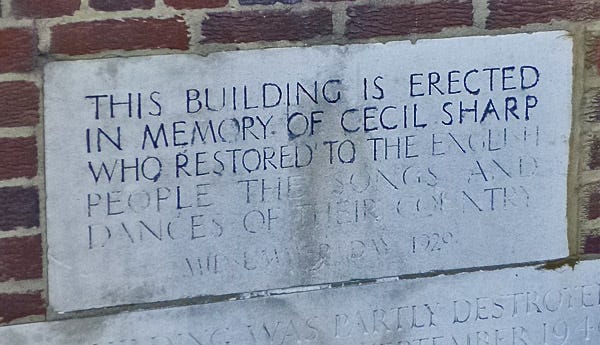
Is changing its name to Folk England going to achieve a massive new yearning from young people to engage in folk music? It is hard to actively envision a young person who (say) wants to start Morris dancing or learn sea shanties from Hull, who is actively put off because they will have to go to a house called Cecil Sharp.
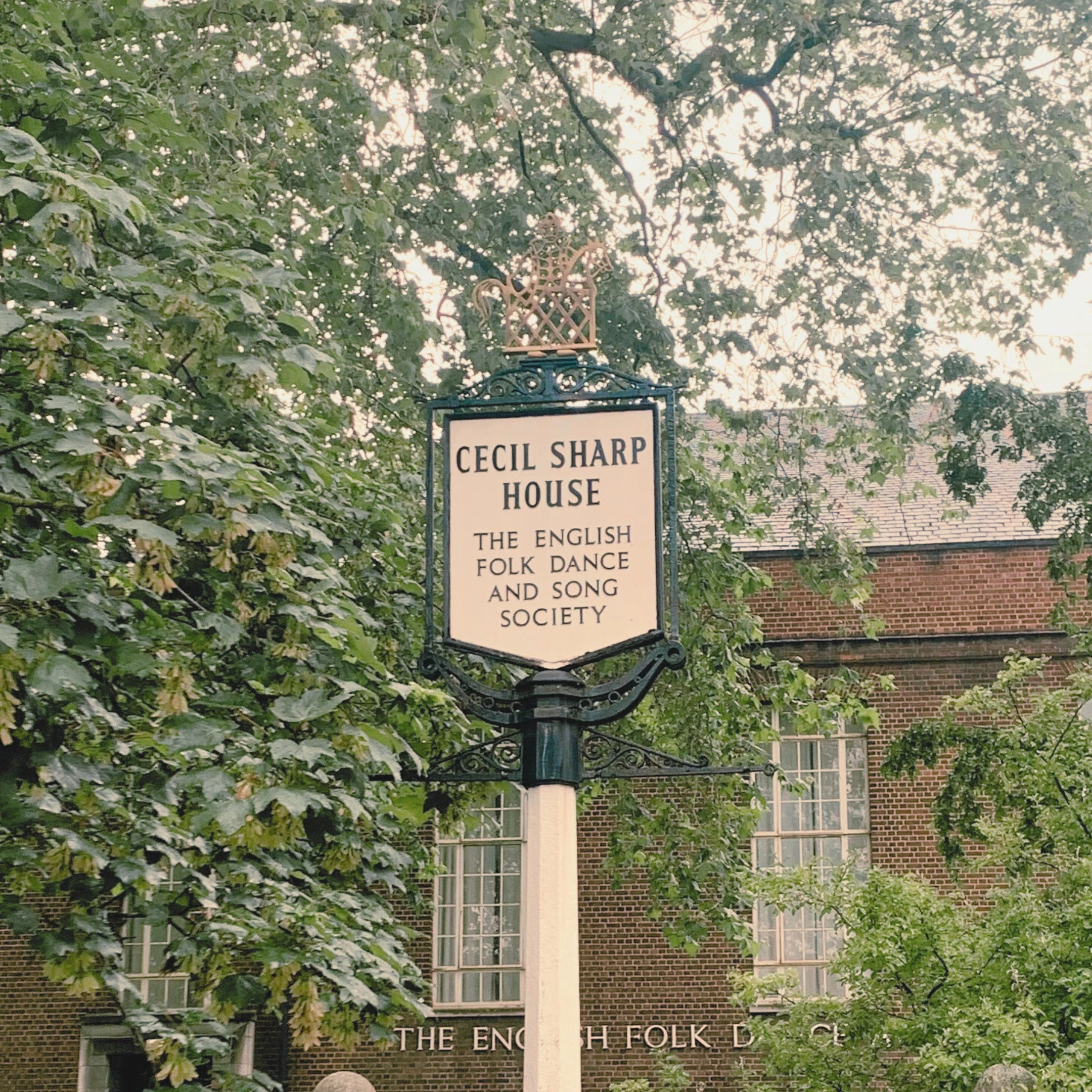
Anyway. For anyone who wants to see the glorious 30’s lettering on the façade of Cecil Sharp House, go soon because its days are numbered.
Ah, the greyification continues. Thank you, I had no idea about this
Particularly if you invert it!