

The No 19 Route
A double decker exhibition inspired by a humble Routemaster bus

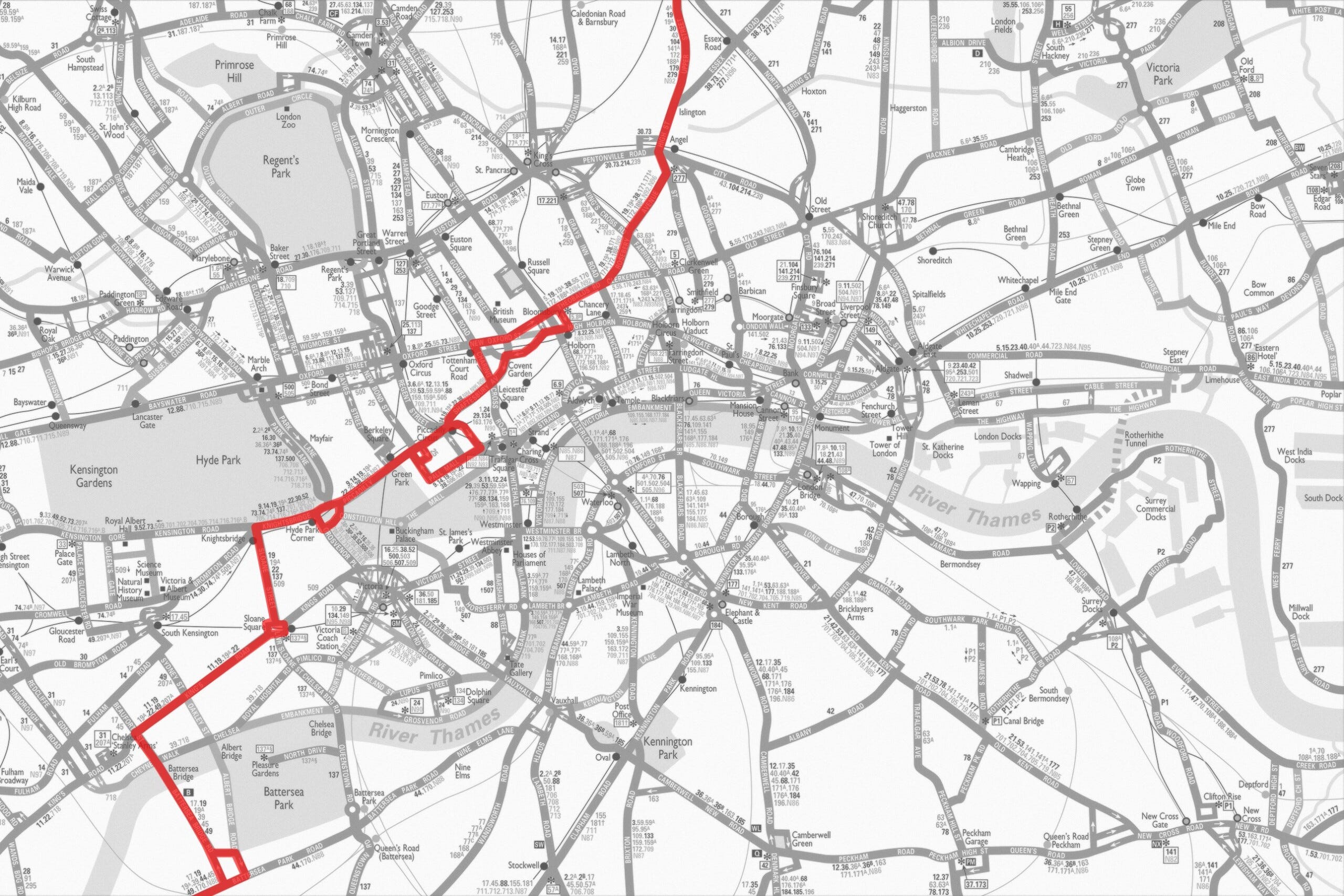
Yes, a group show inspired by this, the route of the No 19 London double decker.
It is organised and tightly curated. This is not always the case with a Group Show. A typical variant on the group show is the Summer Exhibition at the Royal Academy, which often gives the sensation that a group of people have simply bunged it all up. When such a show is discussed, this picture by Zoffany is always ALWAYS used to illustrate it, as if hundreds of paintings put right up to the top of the ceiling helps understand and appreciate art.
Johann Zoffany, The Tribuna of the Uffizi, 1772
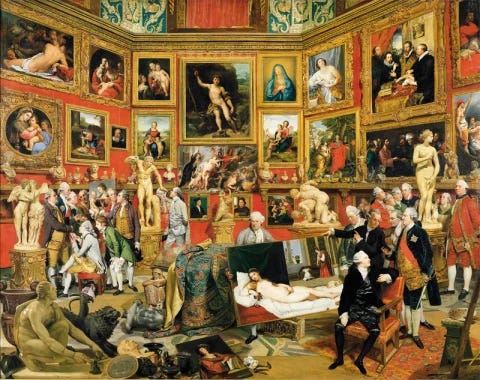
Thank God the Uffizi isn’t like this any more. Spot the men ogling Titian’s Venus of Urbino
To really hammer the point home, Inventing Impressionism in Paris last year exhibited works from the Salon of 1874, just as they were hung then. This is the result. It was meant to look like a crowded jumble, and in that it was very successful.
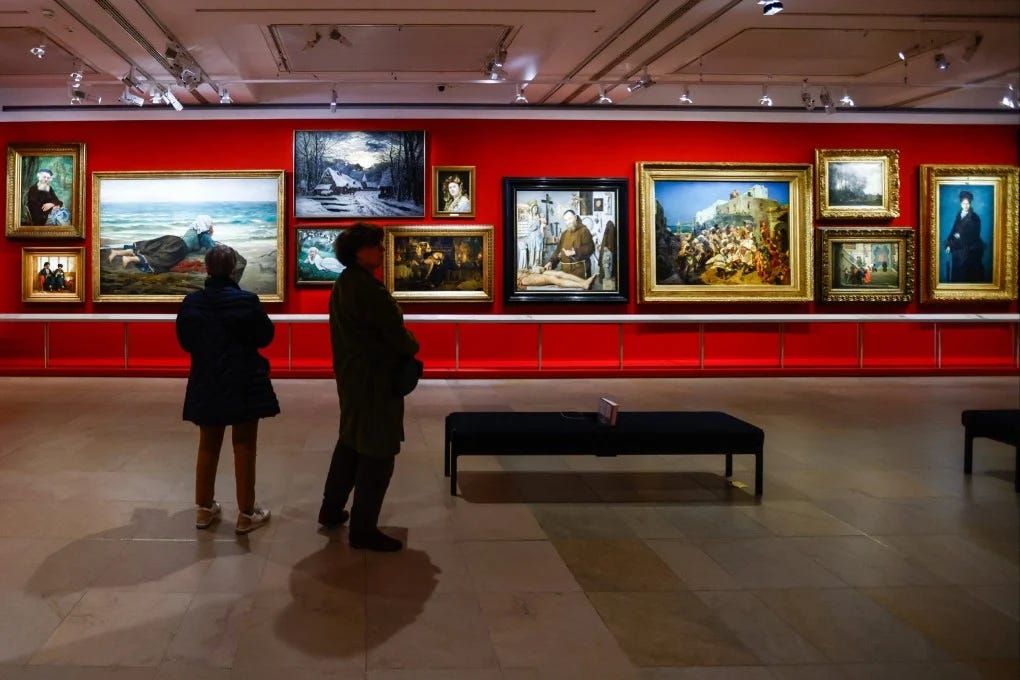
Sifting through hundreds of different claims on your attention at the Musee d’Orsay
I like a Group Show which has an overt theme, or mission, and puts space in between the work. Last year’s Women Masters at the Thyssen Bornemisza in Madrid, was exemplary. It was the first show ever in Spain devoted to female artists 1500-1920. And it wanted visitors to focus. Look at this confidence, and space, and rhythm.
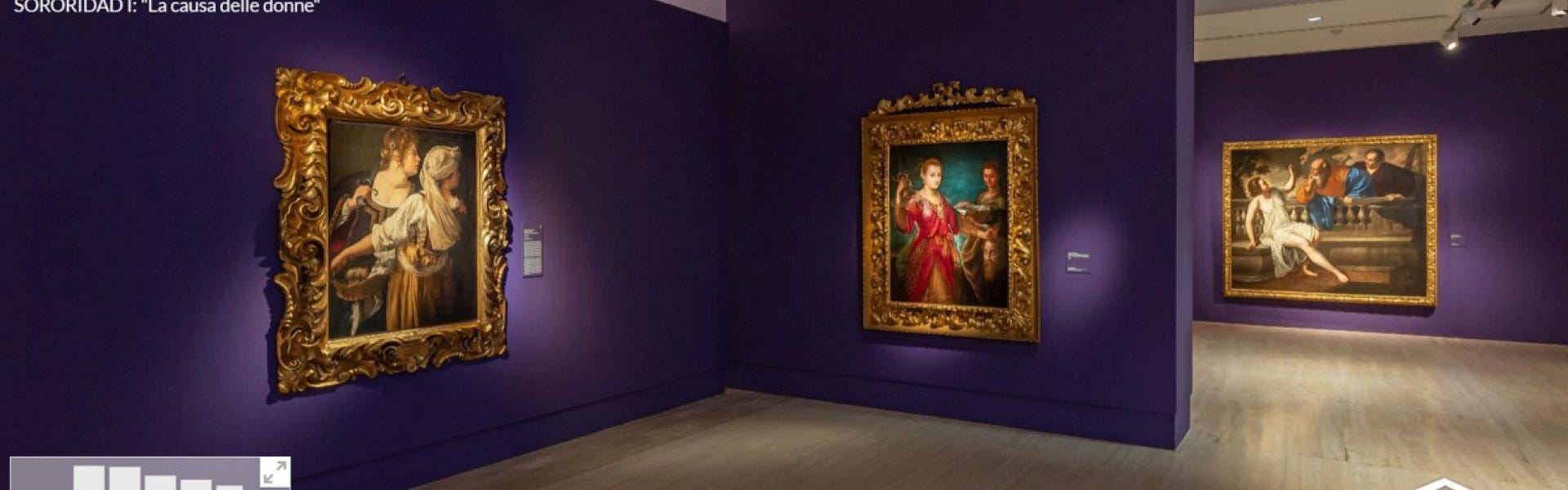
Time to really concentrate on what is before you, with an overarching mission throughout
It beckoned you in with Artemisia Gentileschi (her Judith, Maid and Holofernes is above left), or Berthe Morisot, and then thrilled you with less well-known names, many of whom specialised in work on a domestic scale which simply would have been drowned out by a noisy, crowded hang. Are those big shows typically male? I couldn’t possibly comment.
Anyway I want to draw your attention to two brilliantly curated, tightly focused group shows which have less of the noise. And more of the intellect. Less heat, more light.
Into Abstraction has just opened at Colchester’s Firstsite. I am proud to be Chair of the Board at Firstsite and I can assure you that this show is a delight.
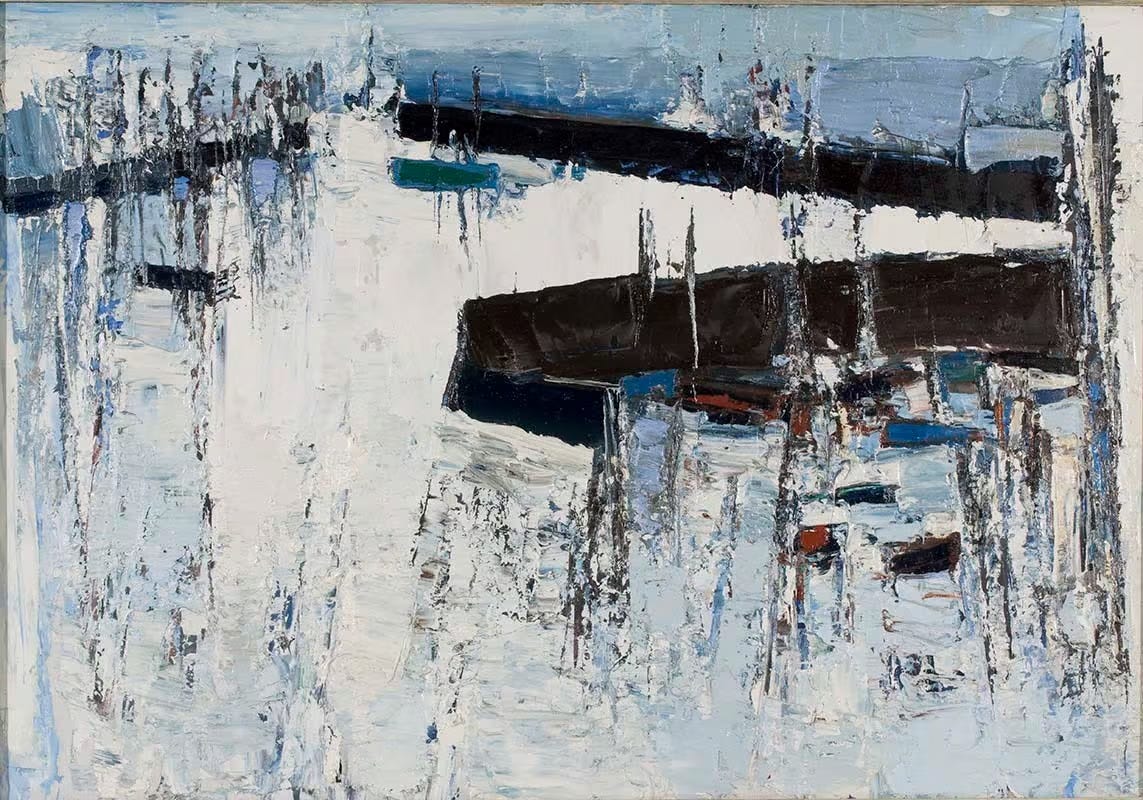
Paul Feiler “Newlyn” 1958 @The Estate of Paul Feiler
Spanning the 1920s to the 1970s, the show traces the story of abstraction across five decades: from playful early experiments and Surrealist influences, to powerful responses to war, industry, and social upheaval. It demonstrates how some of the most influential British artists of the 20th century interpreted and influenced abstract art in response to the environments and times in which they lived.
In particular, mid-century artists, dealing with the shattered landscapes and townscapes of post-war Britain found that abstraction provided an answer. The exhibition, which is free, is hung on jewel-coloured walls, and leads the eye to solutions provided by John Piper, John Minton, Lowry, Hepworth and others. Many of the art works have come from the Hepworth Wakefield.
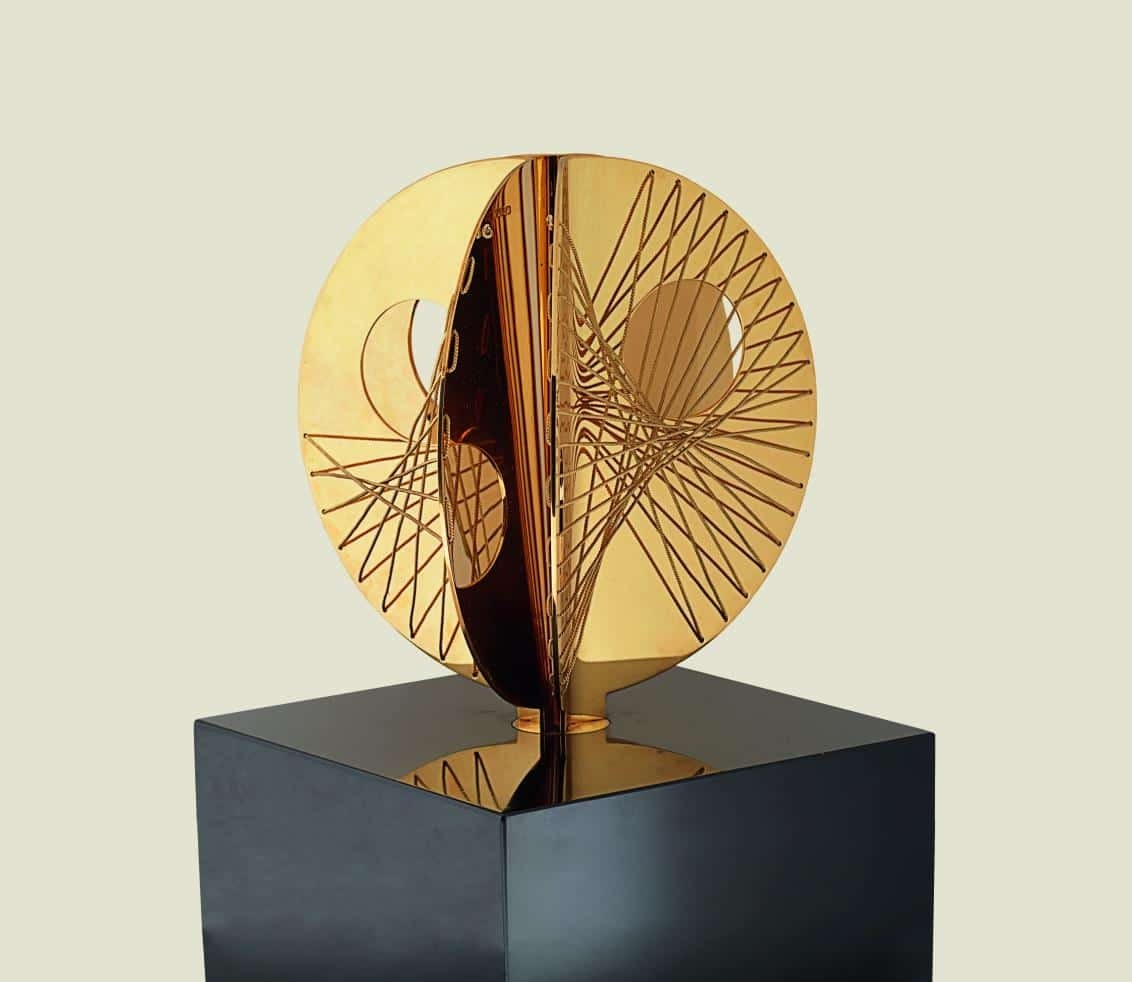
Barbara Hepworth, Mincarlo, Three Curves with Strings, 1971. On loan to The Hepworth, Wakefield
Now, bus routes. Route 19 is a group show curated by the irrepressible Adrian Dannatt and his colleague Julia Muggenburg, and inspired by London Transport’s No 19 bus route. “Number Nineteen is the best bus route in London, everyone knows that,” states Dannatt in his typically bouncy style.
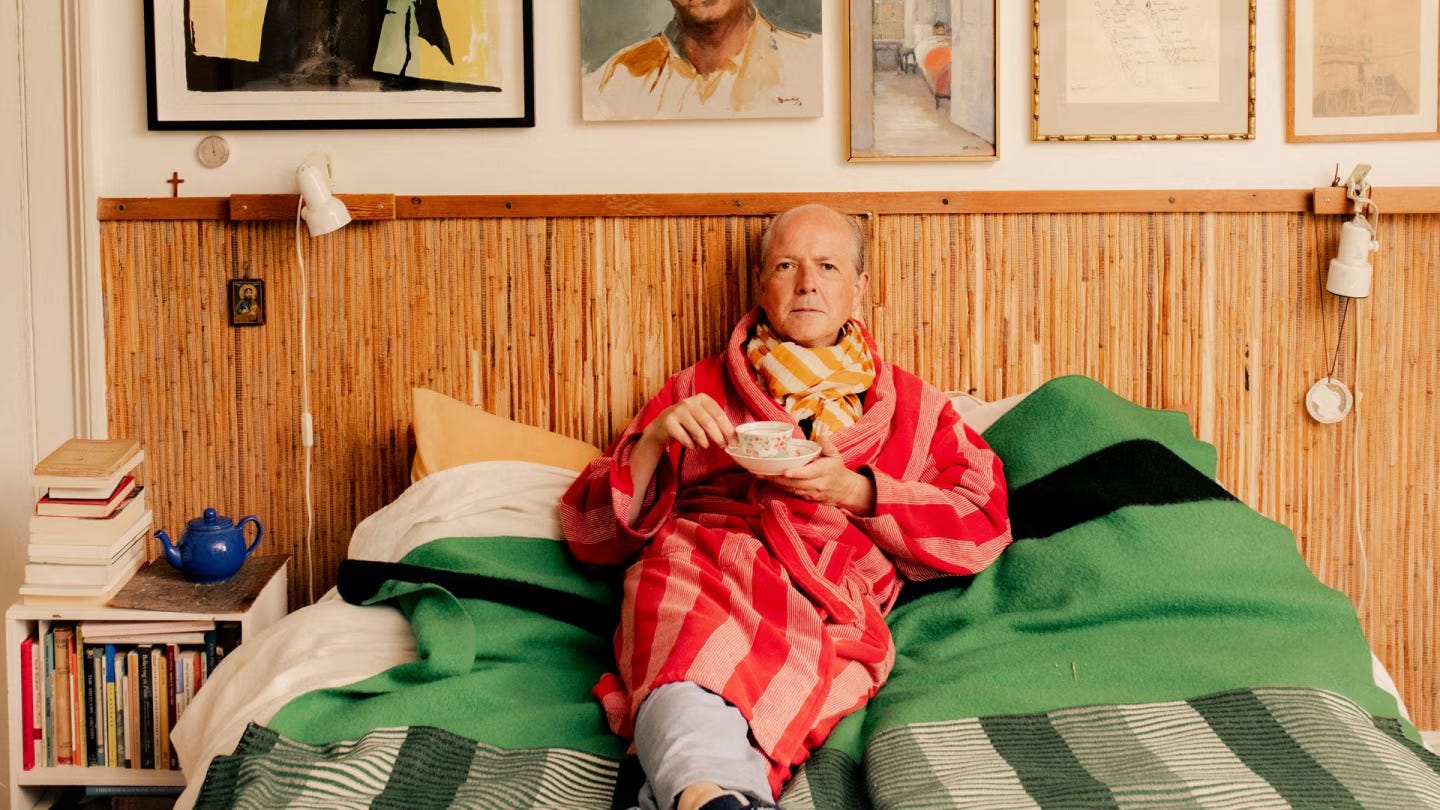
Dannatt, relaxing perhaps after a trip on the No 19 bus Photo: Max Miechowski
“I grew up on it, travelling back and forth throughout my misspent youth between my home in Islington and the watering holes of Soho, to the narcotic lure of those further reaches of the King’s Road…simply everyone seems to have lived or worked along its elegant artery.” Anyone who has read Simon Jenkins’ brilliant survey A Short History of London will know that its buses were originally pulled by horses, and some of their stops, still used today, were originally near hay barns, but if Dannatt thinks the artery is elegant, so be it. He also calls it a cultural ley-line.
Route 19 is a show with 19 artists at the Belmacz Gallery just off Bond Street. All the artists live on or near the elegant artery. It is also, very wittily, a two-storey enterprise so one can revisit the nature of the upper and lower decks of a traditional London bus within the gallery itself.
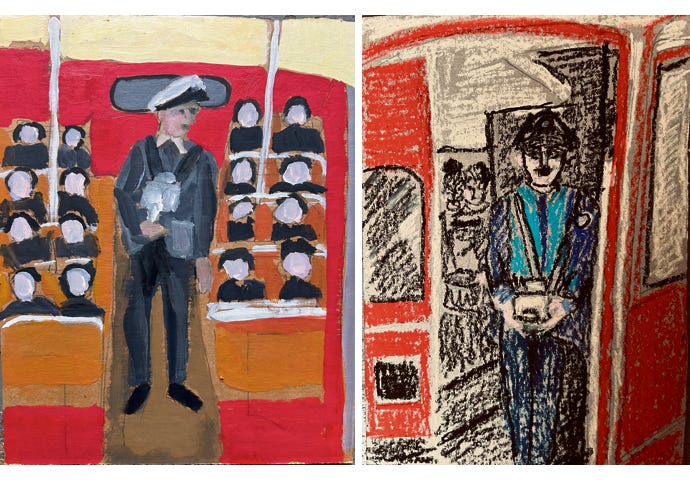
Bus Conductor, both by Hugo Guinness (lived for many years just off the King’s Rd)
The work relates slightly to buses; Hugo Guinness’ Bus Conductor and Allen Jones’ A Fleet of Buses more obviously.
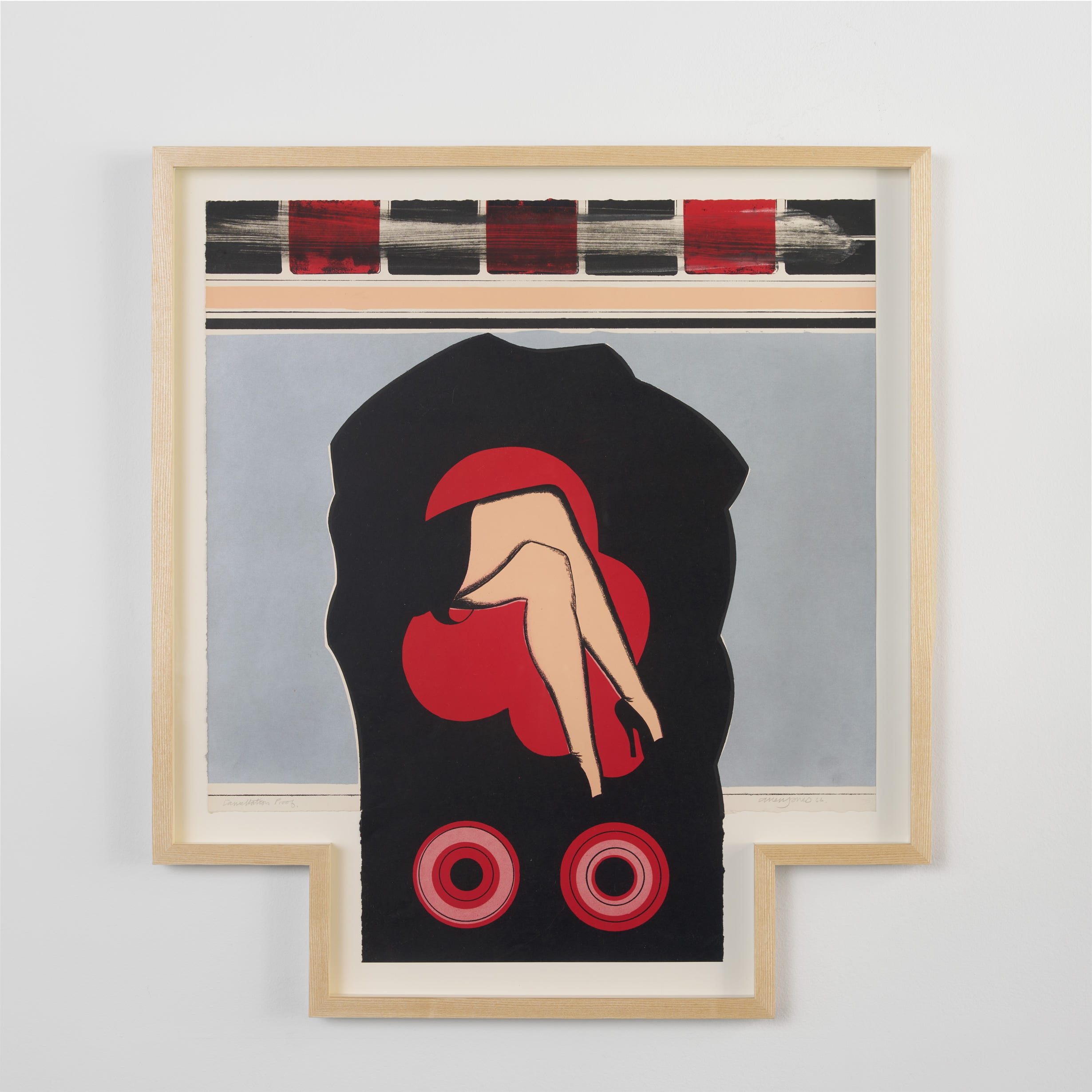
Just what I tend to wear on the No 19…Allen Jones’ A Fleet of Buses (worked at Chelsea Art School)
Sponsored by You, a print by Grayson Perry shows his alter ego, Alan Measles, driving the sports car of Greed through a dystopian landscape.
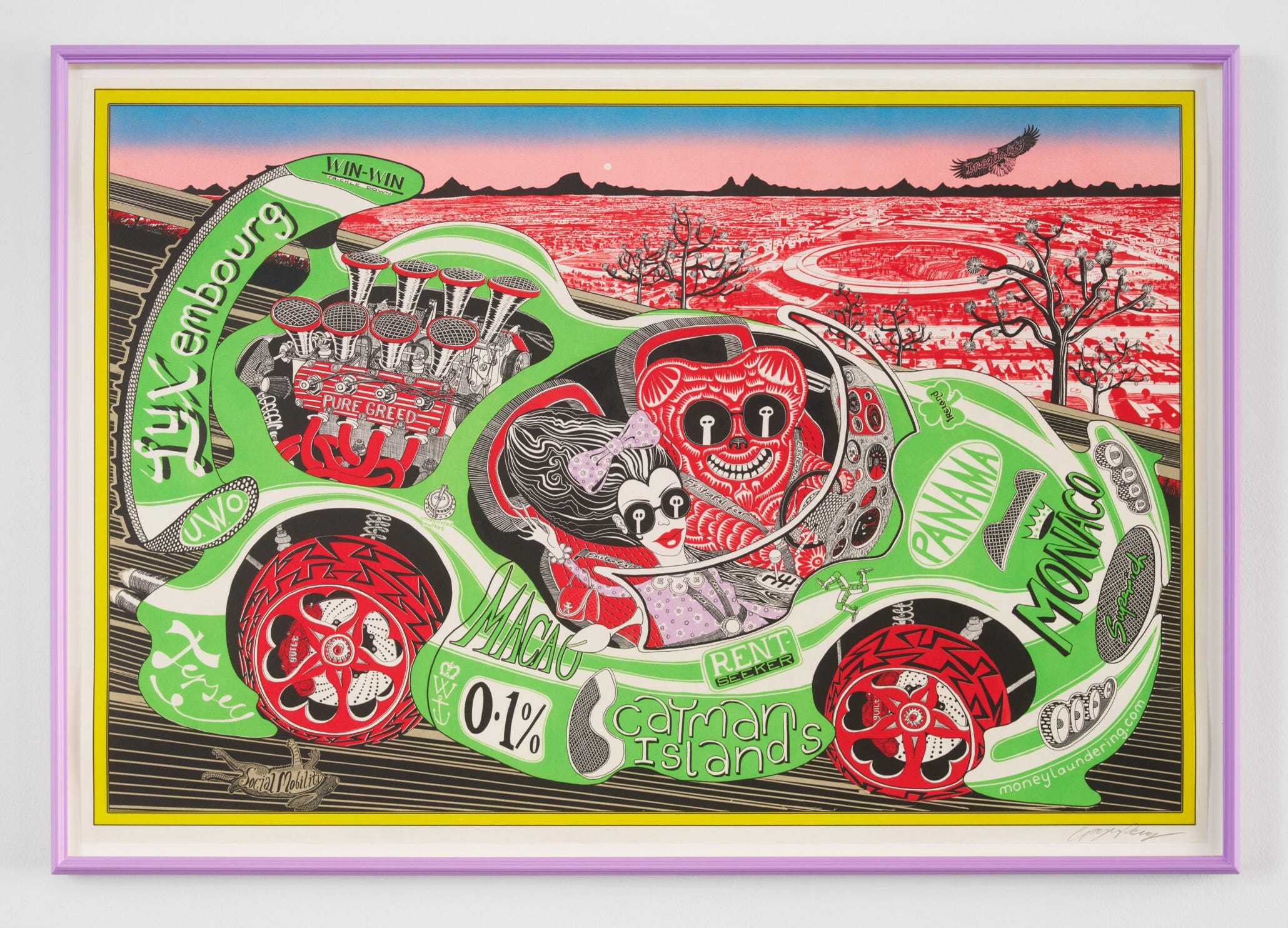
Vroom Vroom…..Grayson Perry’s Sponsored by You at Route 19
There are even literary quotes; “It’s cheaper to take the tube to Piccadilly/And then we can catch a nineteen or twenty-two” (Devonshire Street W.1, John Betjeman)
“Now, sing, Michael, sing on the route of the nineteen bus” (The Clash, Rudie Can’t Fail, London Calling 1979)
In its opening weeks, the show included a thrilling off-site experience. Dusk Pavilion was at the upper reaches of the 19 bus route, in the basement of artist Markus Hansen’s home.
Hansen had built a vast dome, the interior of which was painted in luminous paint. Visitors were encouraged to go into the vault and stand there under a gloomy light. Which I did. At first, nothing happened, bar the sound of the tube far, far below, trundling the Northern Line.
I stood in the vault, perplexed. Then I sat down. Then I lay down. Suddenly, a blinding light. It went off after about 10 seconds. But the luminous walls held the light. So a shadow of my recumbent body was cast on the floor of the vault. I stood up and pressed my hands against the wall. The light went off and on again. The imprints of my hands were clear, and then started to fade.
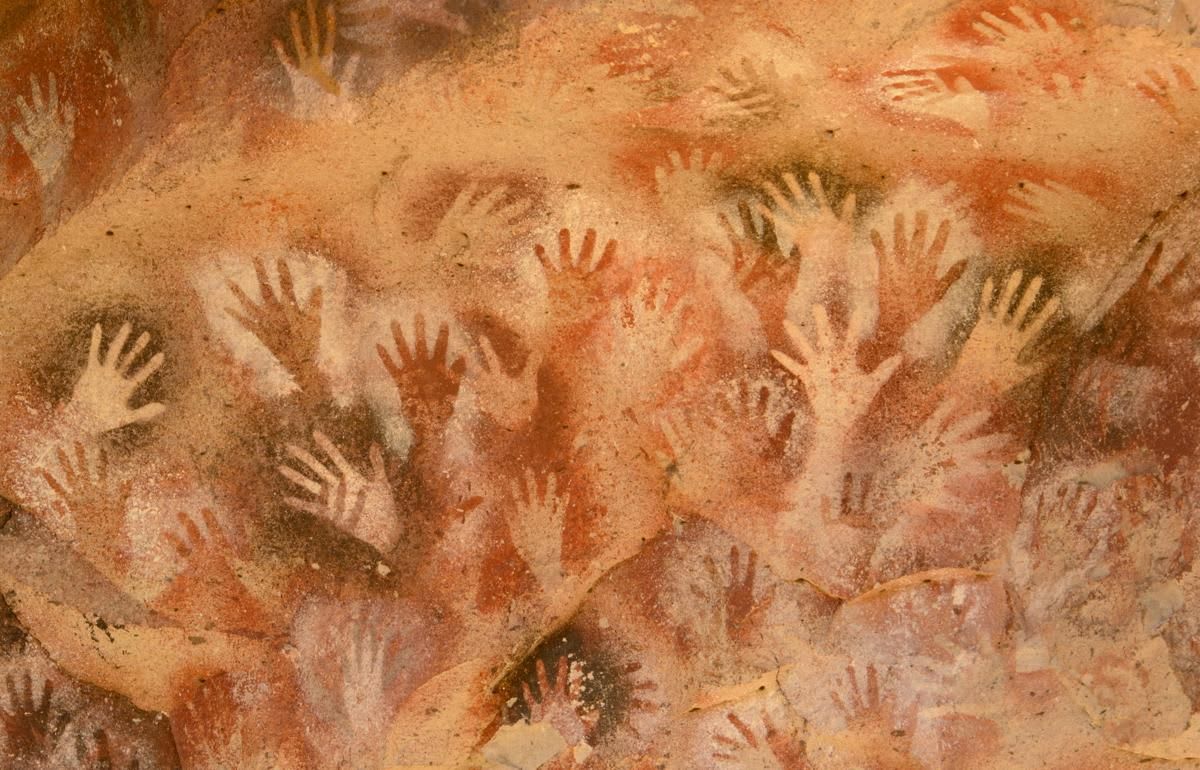
Me in the Dusk Pavilion (actually this is the caves at Lascaux, 17,000 years ago)
I went a bit mental, charging around the dome and throwing all sorts of shapes which were outlined by the light. I even toyed with the idea of doing a sort of naked Yves Klein imprint, but I only had 15 minutes on my own in the Pavilion, so scrapped that plan.
It was so wonderful. It was, as Dannatt put it, “an immersive installation where Plato’s cave meets the cave of Lascaux. It echoes medieval folklore through the body-shadow separation once seen as a diabolic pact.”
Also, you could hear London Transport throughout. All the works in the show are for sale, some at very reasonable prices. Go along now and take home your winnings via the No 19.
I recently visited the Musée Anne-de-Beaujeu in Moulins, Allier. It has undergone a fairly recent and successful renovation, at least in my humble opinion, but the curator had chosen to use the "crowded jumble" approach for the 19th century painting collection. It was rather fun to see, but then again the works on display were not major ones.
Thanks for the tip.Lovelyvidea fir anbexhibition. My most used bus, after its obverse, the no. 91.