

Too much!
The joys of a medium-sized blockbuster

I read Isabel Brooks’ piece about galleries last weekend in The Guardian with joy. At last! Someone else has agreed that seeing too much art is tiresome, and that the great public galleries are simply too big.
This is why I launched my Five of the Best surveys of giant galleries (via this Substack, every other Monday), wherein you only focus on five wonderful masterpieces. I designed it originally to encourage my children to enjoy visiting galleries, but I use it as a strategy myself. Embarking on hundreds of paintings at one go is not destined to end well.
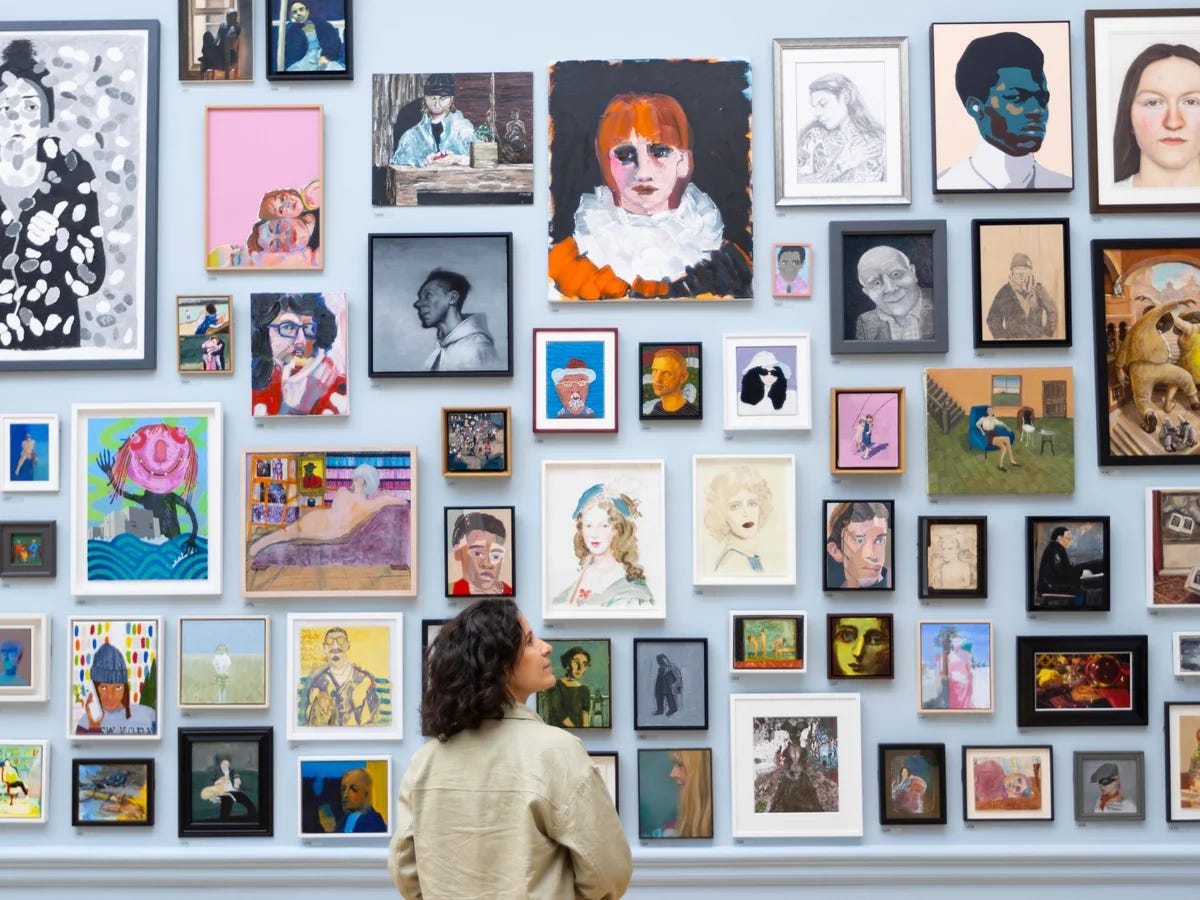
Get me OUT! The Royal Academy Summer Exhibition
Even specific exhibitions can be just too big. The RA Summer Exhibition? Too big. Tracey Emin at Tate Modern? Same. Alexander Calder at the Fondation Louis Vuitton? I haven’t been, (yet) but I know it will be too much, not least because the building itself is vast and judging on experience, the curators there clearly feel they need to use all space possible. Last year, the David Hockney exhibition was a complete Godzilla. 400 art works. Even if you stayed for FOUR HOURS, without going to the loo or taking a break, that would mean looking at a painting every thirty seconds.
Even though I have spent much of my professional life immersed in galleries, I have a sort of Off switch once I am in one. After about 70 minutes in a show, I can’t look at the work properly. After about 100 minutes, I start feeling restive and have to leave. I suspect this is true of many people, only it is unfashionable to admit to it, as it might appear that you are either stupid, or don’t know anything about art. On the contrary, I believe that those of us with short gallery attention spans are having a more profound experience than completists who insist on going through every single room and reading every single explanatory sign.
The average time spent looking at art in a gallery seems to be somewhere between 8 and 21 seconds per art work. That isn’t very much, when you think about the time taken to mount one of these blockbusters. There’s the time spent by the artist making the work, then the gallery itself on choosing it, curating it, measuring it up, and presenting it in the most amenable way possible. All of that work! In order for viewers to give it the same amount of time that it takes to sing the first three lines of Mona Lisa, by Nat King Cole.
Incidentally, it takes six times longer to listen to Nat King Cole sing the whole of “Mona Lisa” than to see the real thing in the Louvre. Having queued up, paid, walked to the gallery, and queued up again, visitors are given 30 seconds to see the painting before being moved on by security staff.
Why do curators put us through such huge shows? I think its because sometimes they are so overwhelmed with choice, that they think “oh, who cares, let’s put it all in”. Either that, or they want to show off that they know absolutely everything about Hockney, or Emin, or Calder. Dear curators, it is far better to show that you know where to stop. An exhaustive experience is just that. Exhausting.
The Frans Hals exhibition at the National Gallery was wonderful because it was limited, yet rich, like double cream. Ditto Seurat’s seascapes at the Courtauld. If you go to a commercial gallery, it won’t typically have much in it. Sometimes it’s because they are small spaces, but not all are like that.
I think dealers only hang a modicum of work on the walls because if you are encouraging someone to part with a lot of money on a single item, it doesn’t do to dilute the experience. It’s the opposite tactic of ‘pile ‘em high, sell ‘em cheap’. Pile them very sparingly, sell ‘em for a lot, is more like it.
I am now so used to readying myself at the door of a giant show for a 10,000 step experience that it comes as a veritable delight to engage with a medium sized blockbuster, as it were, such as the current Whistler at Tate Britain, or Zurbaran at the National Gallery, both of which are beautifully curated and not wildly huge.
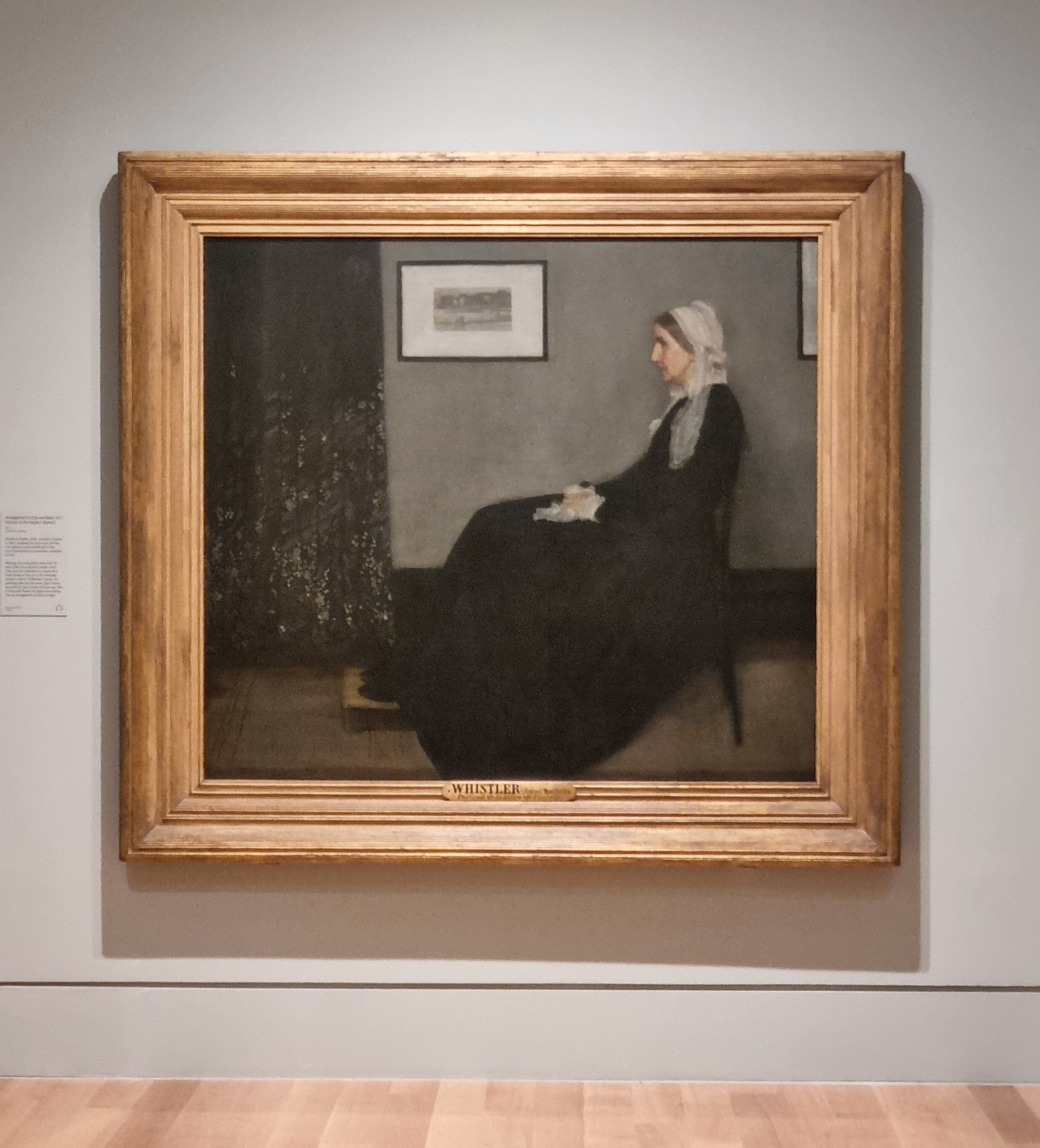
Arrangement in Grey and Black No 1 (Whistler’s Mother). One of the stars of a brilliantly curated, medium sized show
When I went to the Whistler exhibition at Tate Britain, I arrived at about 4.30pm, not really realising that the gallery closes at 6pm. Everyone was politely asked to leave the galleries at around 5.45pm. Perfect. I saw the first five or six rooms, engaged with Whistler’s mother and various other luminaries, gasped at the rendition of his Peacock Room and was immersed in his Nocturnes. Then the gallery started to shut up shop, so I missed the last couple of rooms which had a sort of “there’s a lot of it about” air to them. I might go back, but I might not.

Zurburan’s luscious lemons
Zurburan at the National Gallery meanwhile pulses all the way through; huge canvasses, dramatically lit, feature crisply painted textiles, singular portraits looming out at us from dark interiors; shortly to be martyred saints meeting our gaze equally. Knobbly lemons arrest us. A shackled lamb waits to be slaughtered.
People slow down when they approach each canvas and inspect it, slowly. This is how great art ought to be experienced. The pace is dictated not by us, the audience but by the gallery hosting the work.
It is a beautifully hung show. It is the first retrospective of the 17th century Spanish artist in this country, but it feels restrained. This might have been because there isn’t anything more to show by the master, but equally it might be the National Gallery’s strategy, to keep us wanting more.
In the meantime, stand by for the blockbuster of the year, which will exhibit just one wonderful art work. In one room.

Coming your way soon…
Yes, the Bayeaux Tapestry at the British Museum. If you are a Member, get June 16 in your diary, for that’s when the box office opens. If you aren’t, you’ll have to wait until 1 July in order to get your ticket. But the show runs until July 2027, so no need for a Glastonbury-style panic. Even so….
I agree with what you say, too much and you remember nothing afterwards.
Which goes back to the whole issue of paying entry to big galleries, or not.
I just love the freedom to go into the National Gallery, for example, on my occasional visits to London, to go and look at one painting, or one room. That to me is marvellous, since it's free.
Anyway, I will miss Zurbaran which looks amazing and the Tapestry? I can plan a visit round that, maybe...
Completely agree!