

VIPs only
A shift in tactics at our national collections could be coming our way

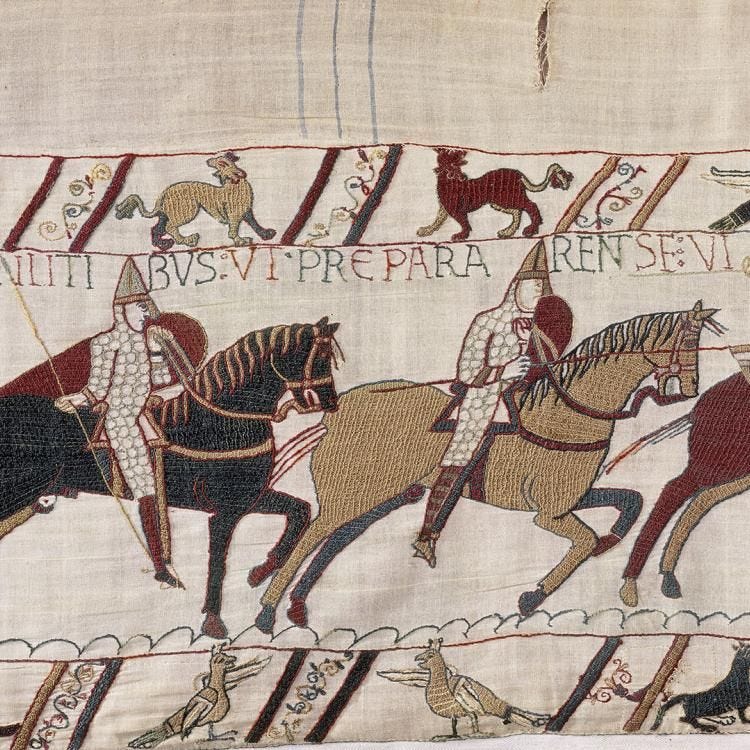
So, after a few days of reading what all the experts think we are going to see next year, or should see next year, I can tell readers of The Arts Stack that you will be visiting the Bayeaux Tapestry (above), cut with Jan van Eyck, and sprinkled with a little Hokusai. However my overall prediction for the arts in 2026, no matter what you are planning to see, comes from Florida.
Keen readers of The Times might have noticed a small piece which ran just after Christmas observing that middle-income Americans have started to be priced out of visiting Walt Disney World in Orlando.
“Disney has shifted its strategy towards targeting the wealthy and the tactic is working,” suggests the paper. Attendance at the theme parks both in Florida and California was flat in 2025, but revenue increased. Why? Because you have to pay extra for just about everything. Disney has noted that the top 20% of Americans spend more on travel than the entire remaining 80%, and has shifted its focus accordingly.
If you are about to visit Walt Disney World Resort in Florida this month with your partner and two children, you will have to pay over $2,000 a day to visit just one of the four parks. Upgrading to the Plus Option, which allows more than one park to be visited, bumps the cost to over $2,500.
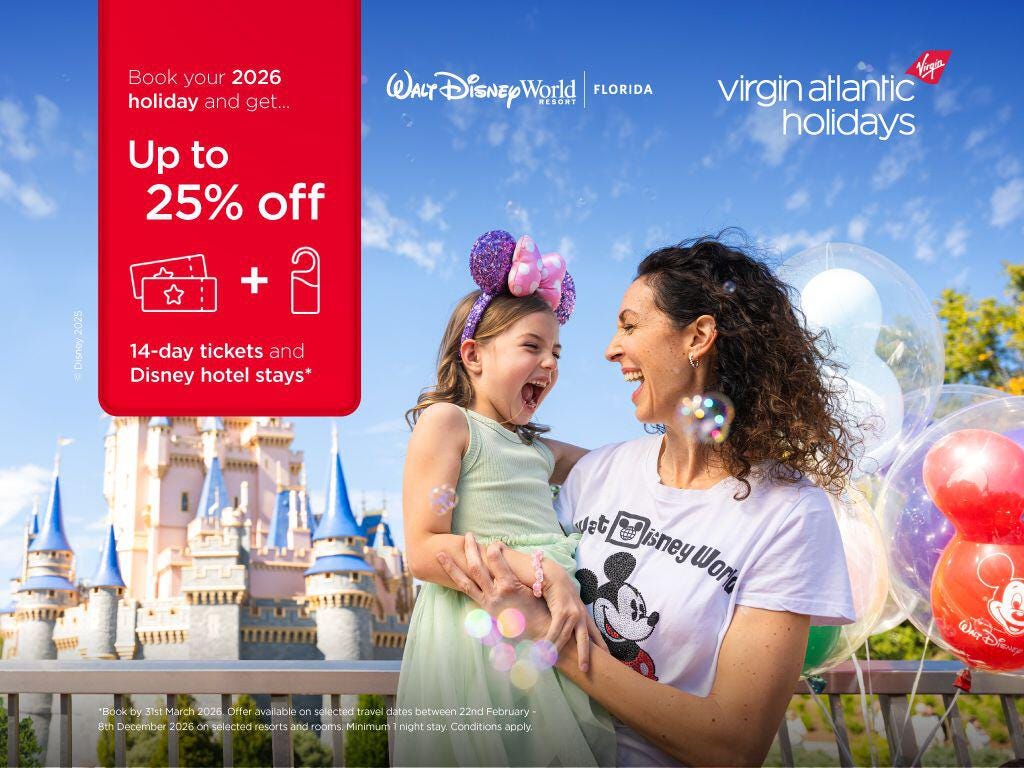
How Disney would like you to see a holiday in Florida
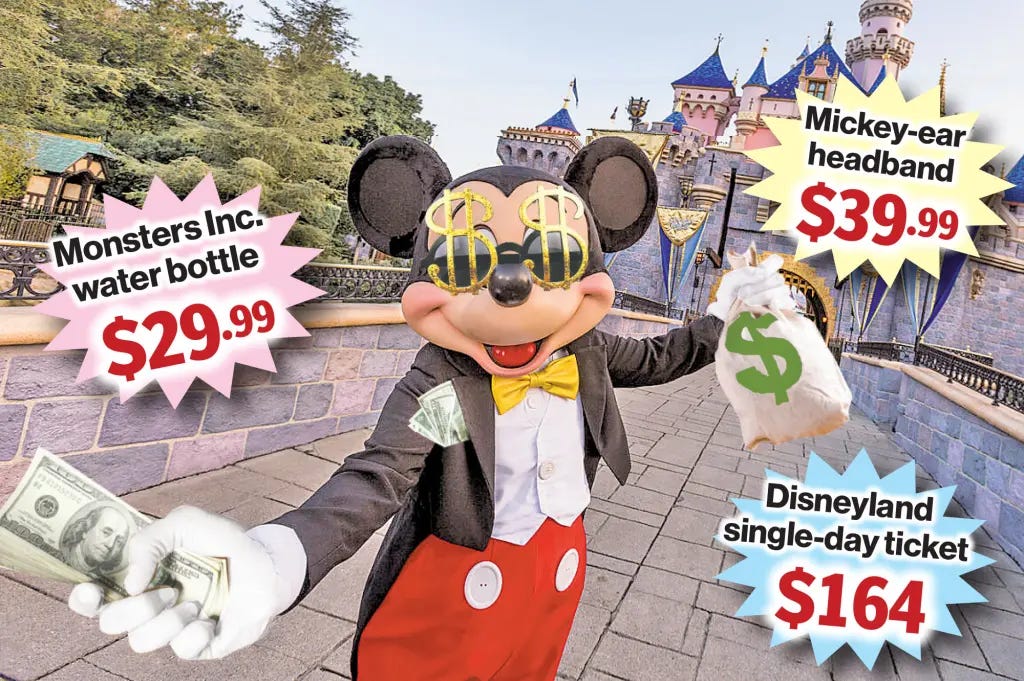
The reality
Of course, Disney still claims that visiting one of its theme parks is still within reach of the average American family.
“Starting with a $50 children’s ticket at Disneyland...Admission gives every guest who walks through our gates up to 15 hours of incredible experience in a single day,” said a spokesperson from Mickey Mouse HQ, “from Broadway-style shows, parades and fireworks…all included in the ticket price.”
Yes, but the real trade is done via all the desirable add-ons, the nearby parking, the jump-the line tickets, the VIP rooms, the food, the photographs and so on, without which you might be handed a rather unappealing package involving 90 minute queues in midday heat, no parking, hopelessly distant hotels and so on.
The New York Times noticed this trend about four months ago, with a piece called Disney and the Decline of America’s Middle Class, by reporter Daniel Burrell who noted that:
“The system dispenses front-of-the-line spots and gives priority to travelers who book a guide, purchase expensive passes or stay at a Disney property. A visitor on a budget …is near the bottom of a pecking order in which, on many days, thousands of spots for the park’s premier rides are reserved for the big spenders.”
It is a far cry from the days when Disney viewed everyone as special, points out Burrell. “An employee handbook from the 1950s quotes Walt Disney as saying, “We roll out the red carpet for the Jones family from Joliet just as we would (with a few embellishments) for the Eisenhowers from Palm Springs.” Even in the 1990’s the then executive Michael Eisner would not hear of visitors paying to skip the line (a Fast Track ticket was brought in only for people willing to visit attractions at a certain time). Those days have long gone.
Could such a thing happen here? It is already.
Given that this government is not going to give any more funding to the arts, (regardless of the suggestions in Margaret Hodge’s thoughtful report on the Arts Council of England that it might), this is the way that subsidised institutions whose budgets are unable to keep up, including the BBC, are going to go. They will have to.
You can see it already; the National Gallery might be free, but given the arrival of a blockbuster show, who won’t want to jump the queues around Trafalgar Square with the a new £130 House Membership? I used mine the other day. The access you get is lovely; a gorgeous room, curated guest talks, table service, a handy corridor straight into the main building, free tickets for special exhibitions.
Meanwhile the British Museum has already started targeting the wealthy in a far more obvious way than its former style (of encouraging arty philanthropists) might suggest. Its inaugural Pink Gala last year charged £2,000 a ticket and raised £2.5 million for the institution. And with the imminent arrival of the wondrous Tapestry, you can forget about all that nostalgia which still surrounds the legendary queues for its Tutankhamen show. Which if you were around in 1972, you would have experienced.
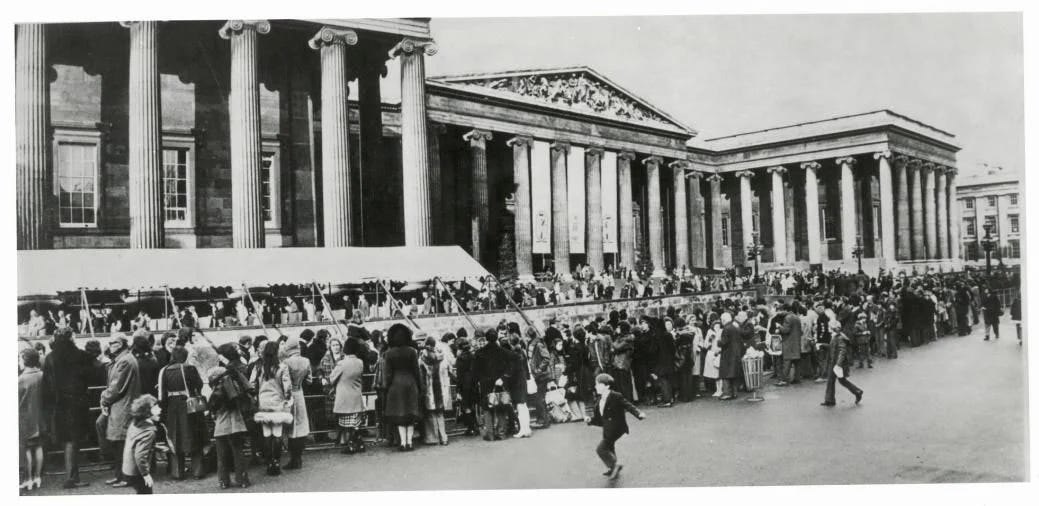
The way we were..queueing patiently for King Tut
When the Bayeux Tapestry comes to the BM this September in the blockbuster to beat all blockbusters, there will be no such quaint democracy.
I predict that tickets for peak (ie convenient) times will be priced accordingly. Members will be allowed to jump the queue, but that won’t be enough. Some sort of pricey “Super” membership will be invented so that Super Members can vault over Members, and so on.
Just as Walt Disney World has started to target the top 20% of American households by income, so will the British arts world.
For all the wonder of free tickets, “General Admission” will start to become a watered-down chimera, or a fond memory, while the real focus, driven by data which can target the well off and apps which can harvest the cash, will be on pricey add-ons and special charges for must-see exhibits, even in the permanent collections.
I understand why; our glorious galleries are cash-strapped, councils are being encouraged to sell off their collections and we are all going to hell in a handbasket. Happy New Year.

Oh yuk. If Bayeux is going to be a super-priced, super-queued "experience" I think I'll save my money and go to see it once it's back in France. A section of the French art world is not happy about its loan to Britain - I watched a great French TV programme about it, featuring much grumbling - very good for my 'grumbling' French vocabulary. At the other extreme of culture (sic) I'm happy to skip the Disney experience for all eternity. We visited the LA one when my children were 5 and 8, and after a couple of hours they asked "Can we go now?" Quite simply it was crap.
The same is happening in theatres - whereas once being a season ticket holder would give me priority access to one-off specials or in-demand productions now a £100+ membership is needed. And given that these are publically-subsidised organisations it is hard not to feel that this is elitism by the backdoor.